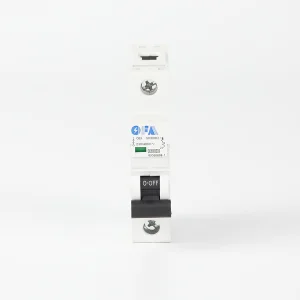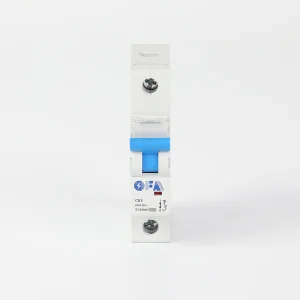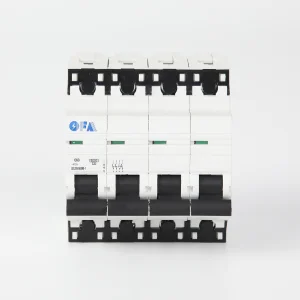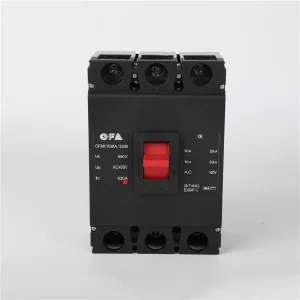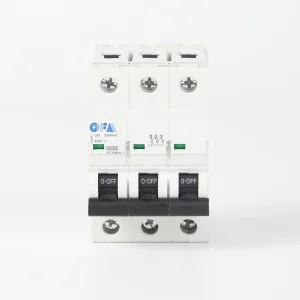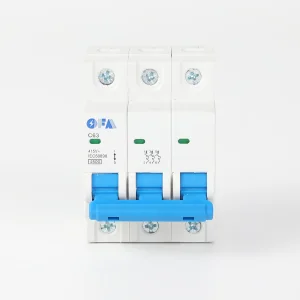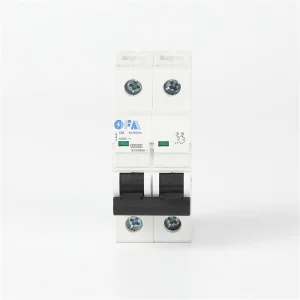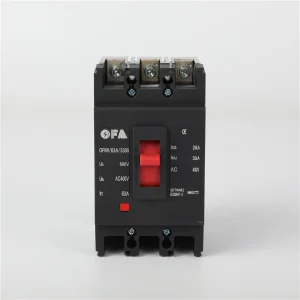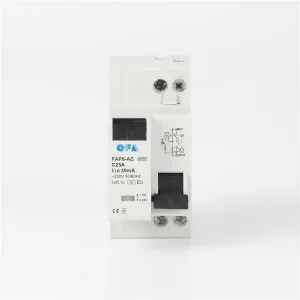
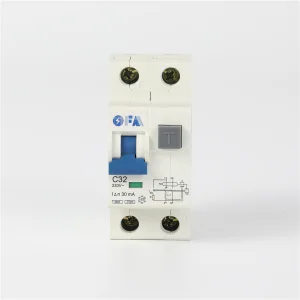
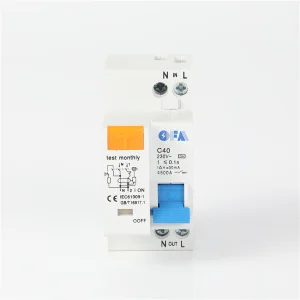
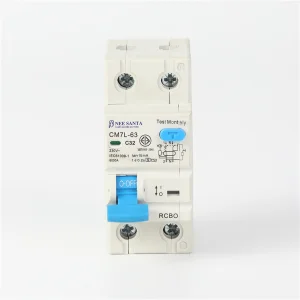
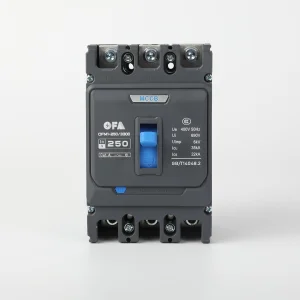
In modern electrical distribution architecture, the Residual Current Circuit Breaker (RCCB)—also frequently classified under Earth Leakage Circuit Breaker (ELCB) or Residual Current Device (RCD) standards—acts as the foundational safety mechanical barrier protecting human lives from direct/indirect contact electric shocks and preventing electrical fires caused by insulation faults. Unlike Miniature Circuit Breakers (MCBs) or Molded Case Circuit Breakers (MCCBs) designed primarily to safeguard cabling and infrastructure against thermal overloads and electromagnetic short circuits, an RCCB operates by continuously detecting vectorial current imbalances across live and neutral conductors.
When evaluating top-tier RCCB factories and manufacturers, global EPC contractors, panel builders, and electrical distributors must analyze critical technological parameters beyond nominal ampacity. The fundamental principle hinges on a high-permeability toroidal zero-sequence current transformer (CBCT). Under normal balanced operating conditions, the vector sum of incoming phase currents equals the returning neutral current ($\sum I = 0$). When a leakage fault occurs to ground (e.g., human contact or damaged cable insulation), the residual flux in the core induces a voltage in the secondary winding, triggering a high-precision magnetic latch relay to trip the mechanism within milliseconds.
Designed specifically for standard sinusoidal alternating residual currents. Ideal for basic resistive lighting, heating, and legacy commercial building circuits without internal power electronics.
Responds to both sinusoidal AC and pulsating direct residual currents. Essential for modern electronic loads, single-phase variable frequency drives (VFDs), washing machines, and IT equipment switching power supplies.
Engineered for complex high-frequency and smooth DC residual currents. Crucial for solar photovoltaic (PV) string inverters, battery energy storage systems (BESS), and 3-phase EV fast charging infrastructure.
Rooted in Yueqing, Wenzhou—globally recognized as the "Capital of Electrical Appliances in China"—Wenzhou OFA Electrical Technology Co., Ltd. (founded in 2013) has established itself as an authority in power distribution switchgear, control equipment, and low-voltage protective devices. Combining state-of-the-art lean automation with stringent empirical quality testing, OFA operates under an ISO9001 certified quality management framework, delivering scalable production capabilities without compromising component precision.
Maintaining standard operating procedures (SOP) that mandate 100% routine testing prior to dispatch, OFA’s technical team evaluates mechanical longevity, thermal rise dissipation, dielectric insulation performance, and tripping curve thresholds for every production batch. Holding major international safety certifications including CE and IEC compliance, OFA products are integrated into public utility projects, industrial plants, renewable energy sites, and high-density commercial developments across more than 50 countries.
A truly reliable electrical system requires seamless coordination between main incoming distribution switchgear and branch final circuits. OFA’s engineering ecosystem encompasses a full spectrum of circuit interruption technologies designed for modular flexibility:
| Device Category | Core Functionality | Primary Scenarios | Key Technical Specs |
|---|---|---|---|
| RCCB (Residual Current Breaker) | Pure earth fault & leakage protection against direct shock and risk of electrical fire. | Residential distribution panels, wet environments, commercial final sub-circuits. | In: 16A to 125A, IΔn: 10mA, 30mA, 100mA, 300mA; 2P/4P poles. |
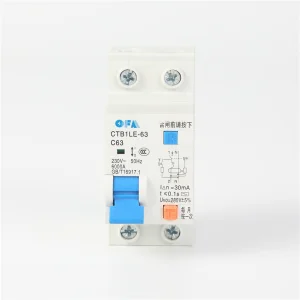
| RCBO (Combined RCCB + MCB) | Integrated overload, short-circuit, and high-sensitivity residual leakage protection in one housing. | Critical single circuits where space-saving DIN-rail installation is required. | Current up to 63A/80A, Breaking Capacity: 6kA/10kA; Curves B, C, D. |
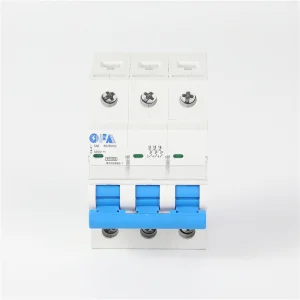
| MCB (Miniature Circuit Breaker) | Low-voltage overcurrent and thermal short-circuit protection for sub-distribution circuits. | Home, office, and light-industrial board panel wiring. | Rating: 1A-125A, Poles: 1P, 2P, 3P, 4P; 4.5kA, 6kA, 10kA rupture rating. |
| MCCB (Molded Case Circuit Breaker) | High-current circuit switching, heavy industrial overload, and adjustable thermal-magnetic/electronic trip. | Main incomers, motor protection control panels, power plant sub-stations. | Frame currents up to 630A/800A, Icu breaking up to 50kA/85kA. |
| ACB (Air Circuit Breaker) | Intelligent primary main power supply control, network monitoring, and system protection. | Data center mains, transformer low-voltage side, large commercial complexes. | Amperes up to 6300A, intelligent trip units (SCADA / Modbus integration). |
| IS (Isolator Switches) | Safe manual circuit isolation providing visible clearance during repair and maintenance. | Solar PV combiner boxes, main panel disconnects, HVAC equipment. | Voltage up to 1000V AC/DC, high endurance contact isolation mechanics. |
Selecting the right China-based RCCB factory delivers profound commercial and operational leverage to international procurers. Yueqing (Wenzhou) hosts the world’s most dense cluster of low-voltage electrical component suppliers, precision molding workshops, silver-alloy contact stampers, and calibration laboratories. This unparalleled industrial ecosystem yields three main competitive advantages:
From BMC/PC flame-retardant housing injection molding and copper terminal machining to automated toroidal core coil winding, 90% of raw components are processed locally within a 15-kilometer radius, drastically cutting lead times and sub-tier supply chain disruption risks.
OFA leverages rapid prototyping tooling and flexible assembly lines to execute custom branding, specialized trip sensitivity calibrations (e.g., 10mA for medical/hydro applications), custom terminal configurations, and tailored box packaging for international OEMs.
High-volume production efficiencies combined with lean digital process controls allow Chinese manufacturers to offer premium-grade RCCBs compliant with international standards at competitive pricing structures, maximizing distributor profit margins.
Navigating regulatory hurdles is a prerequisite for seamless market entry in the electrical trade. Premium RCCB manufacturers must satisfy strict harmonize standards depending on target destinations:
Modern AC Wallboxes and DC fast chargers demand Type A or Type B RCCBs with 6mA smooth DC residual current detection to prevent core saturation in upstream distribution boards.
Grid-tied solar inverters generate capacitive ground leakage currents. Specialized RCCBs prevent unwanted nuisance tripping while ensuring immediate disconnection upon real insulation degradation.
Automated assembly lines, robotics, and CNC machine shops require high-ampacity 4-Pole RCCBs integrated alongside MCCBs to protect operators from equipment frame leakage.
Standard consumer units in homes, hotels, and retail centers utilize high-sensitivity 30mA RCCBs on lighting and socket sub-circuits for human life safety.
As power grids transition toward decentralized renewable microgrids and smart digitalization, residual current protection technology is undergoing pivotal advancements:
1. IoT-Enabled Smart Circuit Breakers: Integration of RS485 (Modbus-RTU), Wi-Fi, and Zigbee microchips within RCCBs and RCBOs allows real-time telemetry of leakage current values, temperature, and voltage fluctuations to cloud monitoring dashboards. Maintenance teams can predict insulation breakdown long before total tripping occurs.
2. Increased Surge Immunity & Anti-Nuisance Tripping: Lightning surges and high-frequency harmonics generated by LED drivers and VFDs often cause conventional RCDs to trip spuriously. Next-generation Type AP-R (high immunity) RCCBs feature transient current delay circuits, remaining stable during heavy switching transients.
3. Compact Modularization: Minimizing DIN-rail footprint remains a major engineering driver. 1P+N RCBOs housed in a single standard 18mm module width allow panel builders to double circuit density in retrofit installations.
Partnering with Wenzhou OFA Electrical Technology Co., Ltd. follows a streamlined, quality-assured engineering workflow:
Submit technical parameters (Voltage, In, IΔn, Pole config, tripping curve, target market certifications). OFA engineers match optimized standardized or custom solutions.
3D design verification, sample production, lab type-testing (dielectric, operating time, temperature rise), and client validation under real-world loads.
Automated component assembly, laser laser-marking of ratings, 100% calibration testing, and protective anti-shock export packaging.
FOB/CIF international freight management, complete compliance documentation provision (CE, Test Reports, CO), and full post-delivery technical support.
 OFA Electrical