 OFA Electrical
1 / 3
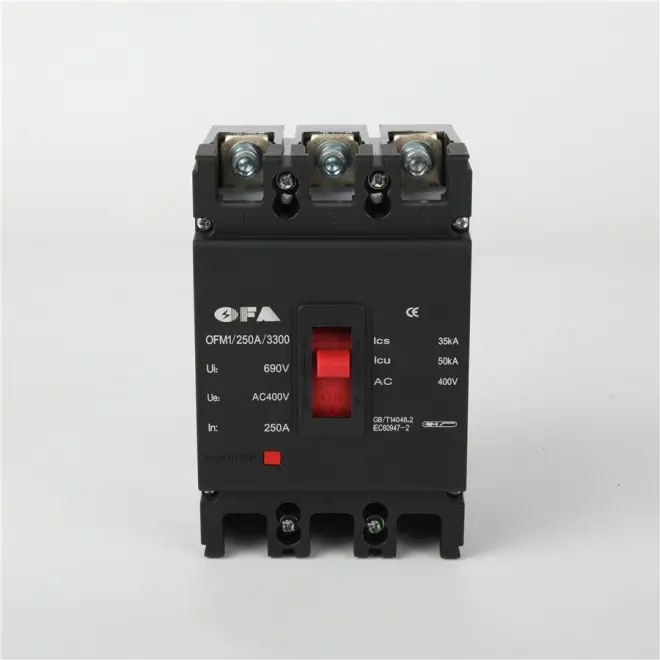
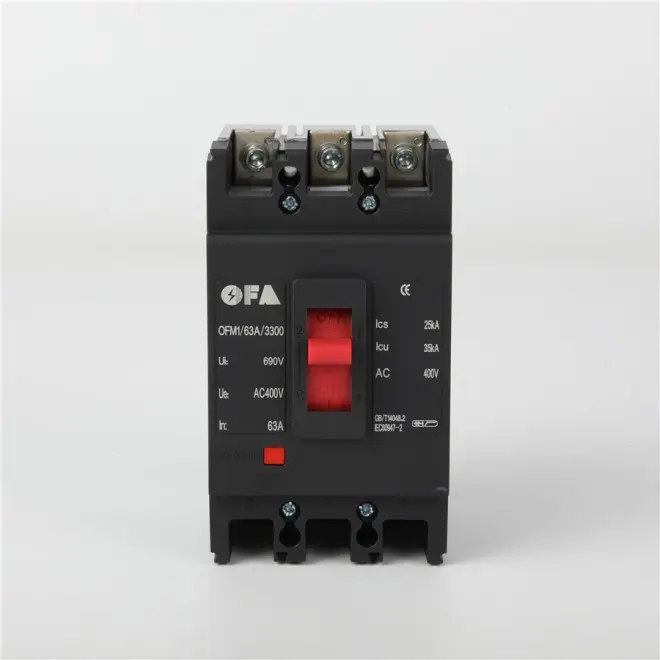
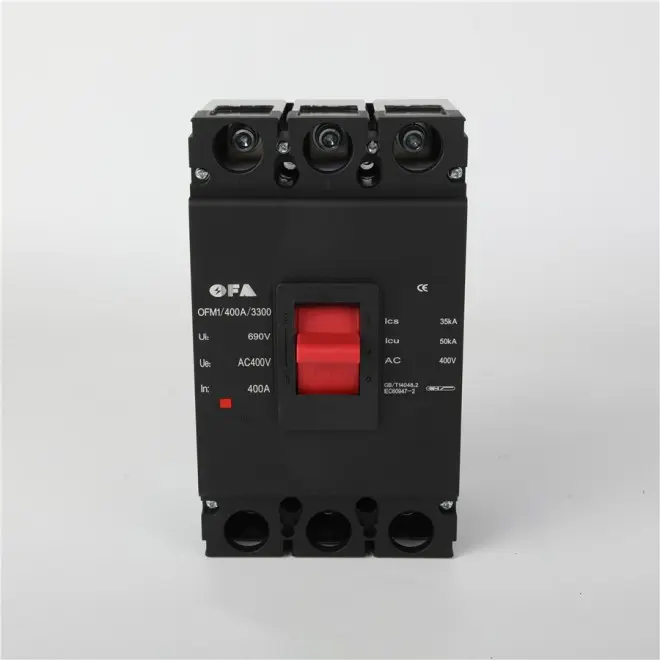
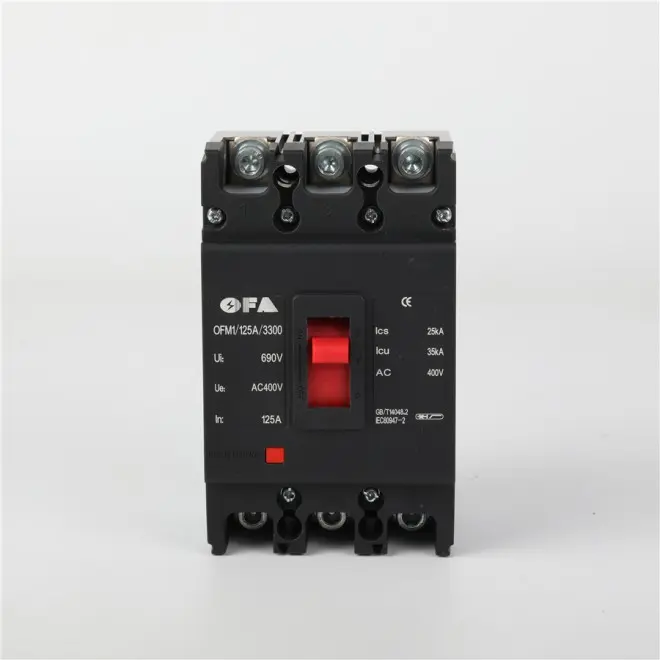
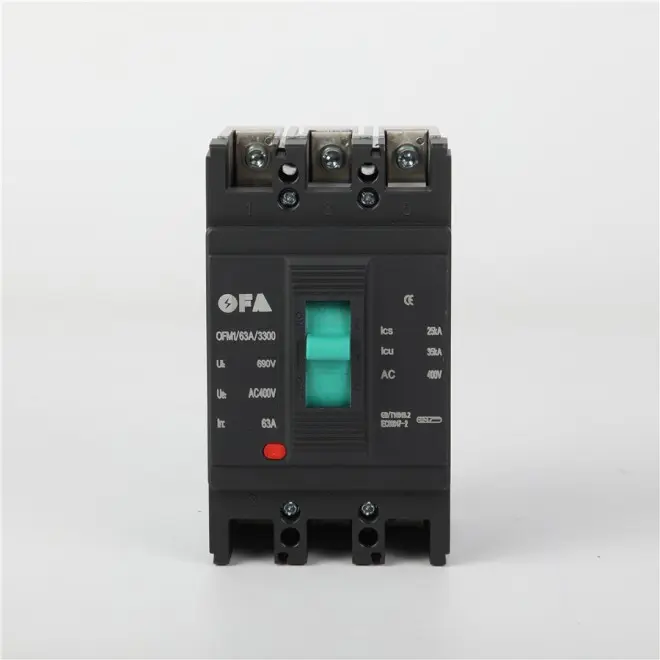
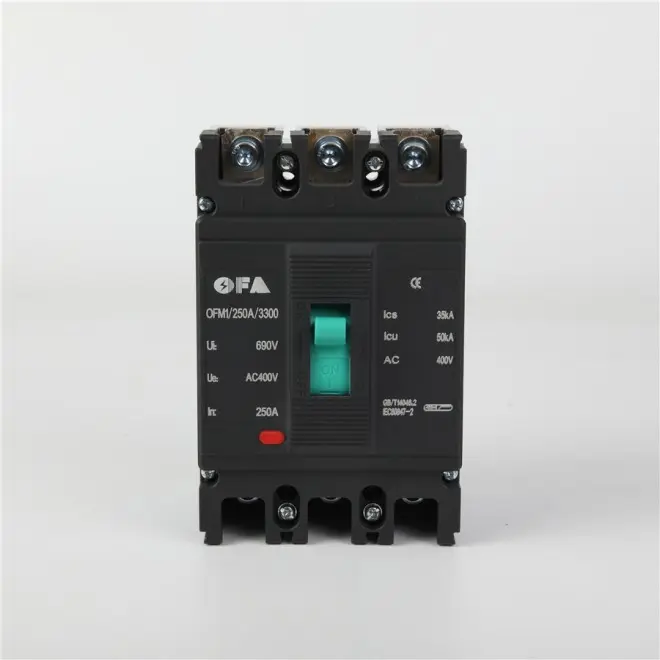
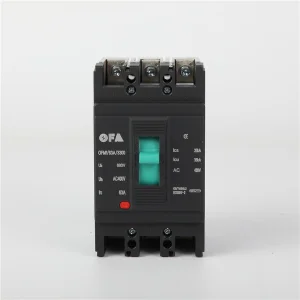
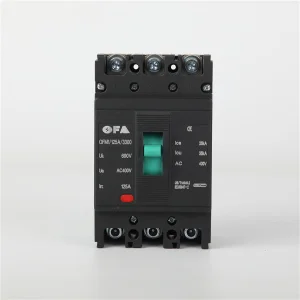
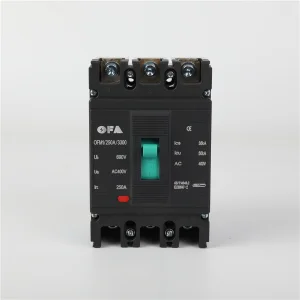
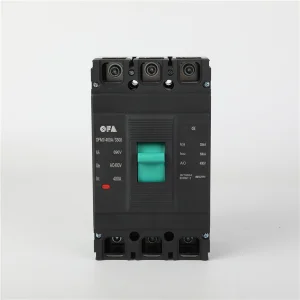
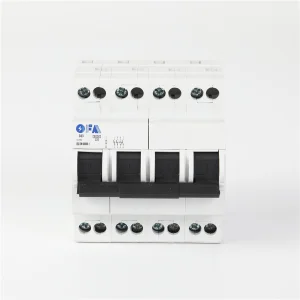
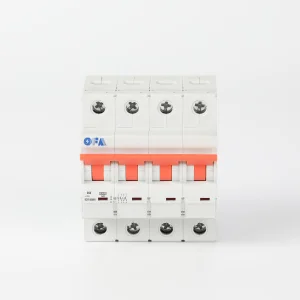
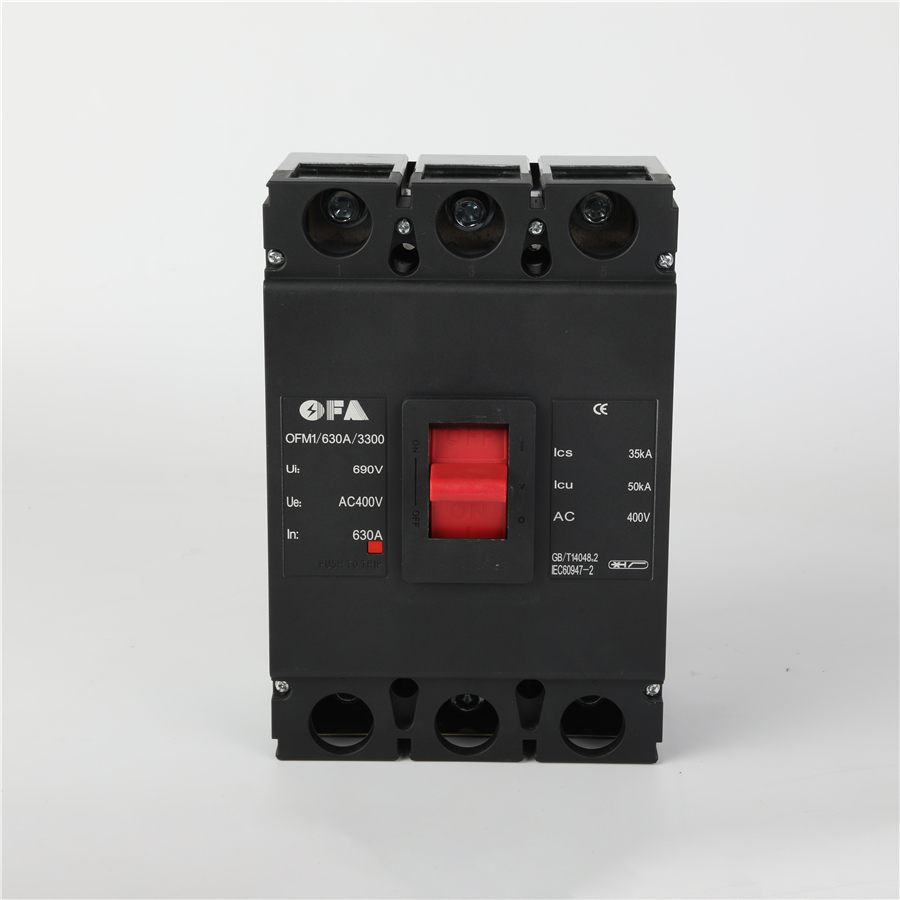
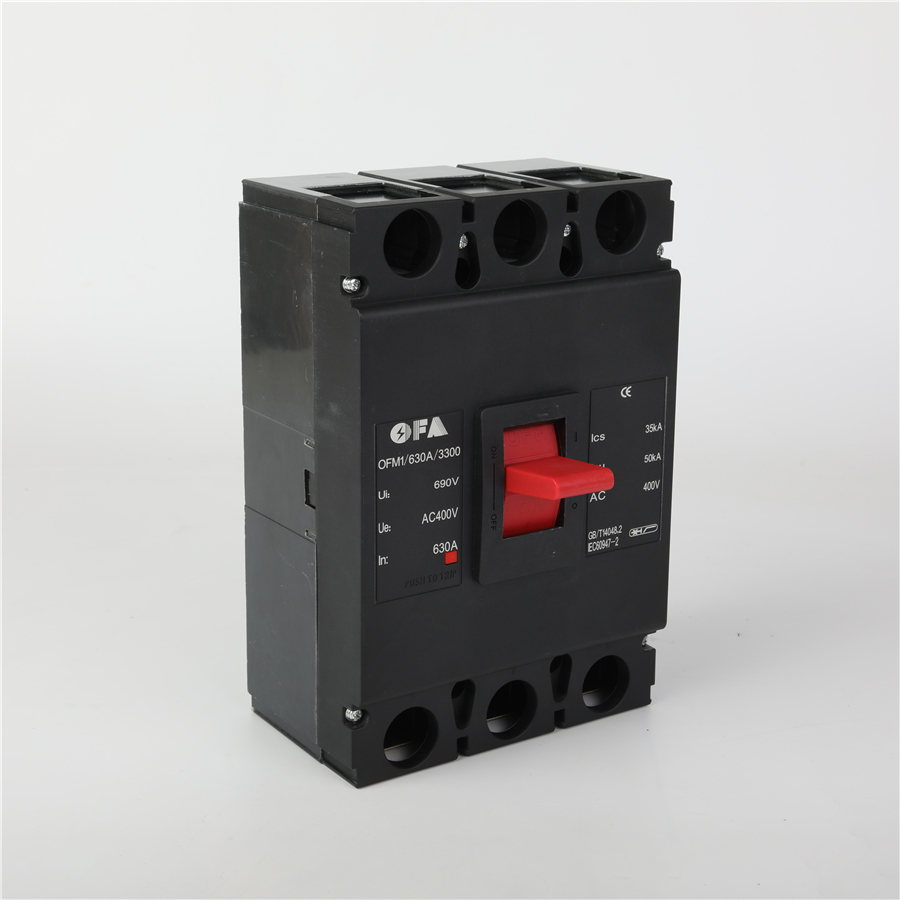
MCBs are primarily used for low-current applications in residential and small commercial installations (typically up to 100A or 125A). In contrast, MCCBs handle higher current ratings (such as 63A to 400A and above) with adjustable trip settings, making them ideal for heavy industrial and high-power commercial distribution systems.
Selection depends on your total connected electrical load, conductor wire size, and system operating voltage. Ensure the circuit breaker's rated current (e.g., 63A, 125A, 250A, or 400A) matches or slightly exceeds the maximum continuous current while ensuring comprehensive thermal and magnetic protection for the circuit.
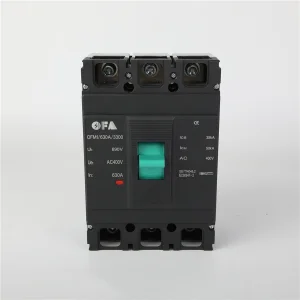
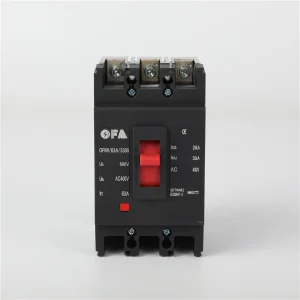
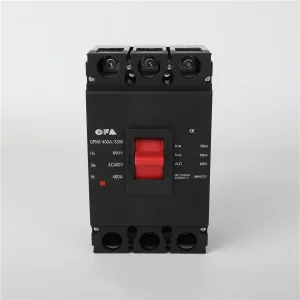
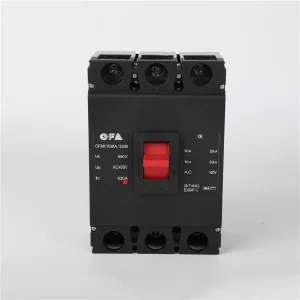
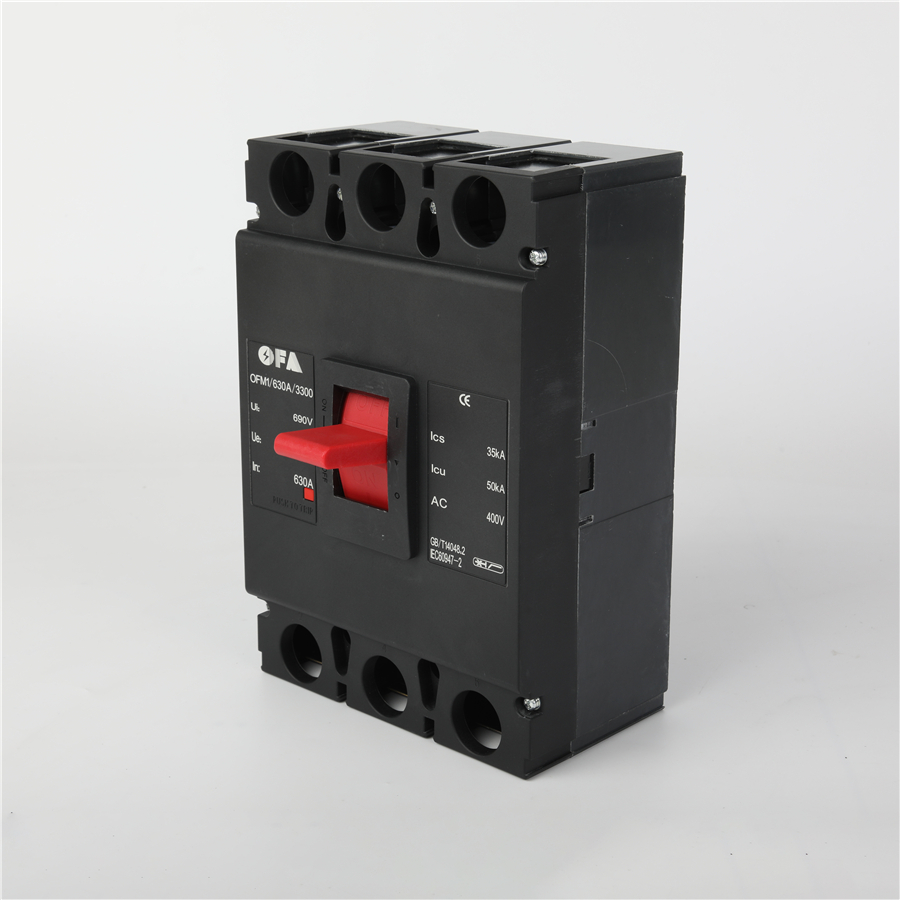
OFM1 MCCBs provide essential protection against electrical overloads and short circuits. They safeguard electrical cables, motors, and distribution equipment from damage caused by high fault currents and system faults.
Yes, they are often combined within the same electrical system. Typically, an MCCB serves as the main incoming circuit breaker for higher ampacity protection, while smaller MCBs serve as branch circuit protectors downstream.
Visual inspections and mechanical operation checks should be performed at least once a year. Regular maintenance ensures trip mechanisms operate correctly and terminals remain secure, maintaining safety and preventing unexpected downtime.