Why Choose a Miniature Circuit Breaker Box?

Time:2026-10-17 Author:Ethan
0%

Choosing the right electrical enclosure can affect safety, maintenance, and daily convenience. A Miniature Circuit Breaker Box offers a compact way to organize circuit protection in homes, workshops, offices, and small commercial spaces. Its main role is clear: each circuit receives controlled protection against overloads and short circuits.

Size matters.

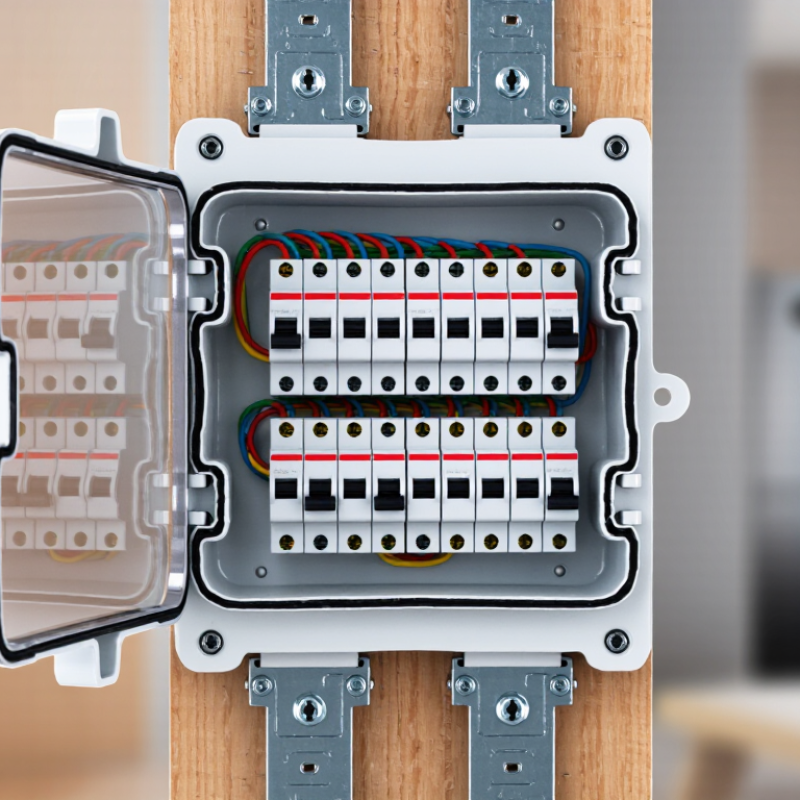
A well-designed box keeps breakers arranged in neat rows. It also leaves enough space for safe wiring and future inspection. During electrical upgrades, technicians often appreciate clear labels, accessible terminals, and a sturdy insulated enclosure. These details can reduce troubleshooting time when a kitchen outlet, lighting circuit, or outdoor socket stops working.

Protection is not the only benefit. A compact enclosure can fit limited wall space without sacrificing basic organization. Transparent covers, strong mounting points, and reliable busbar connections may improve practical use. However, compact does not always mean better. An overcrowded box can make heat control, cable routing, and maintenance more difficult.

That point deserves attention.

Before choosing a Miniature Circuit Breaker Box, users should check the number of circuits, breaker ratings, enclosure material, installation environment, and available expansion space. Professional assessment remains important, especially in older buildings or systems with unclear wiring. Product specifications should come from a dependable manufacturer and match local electrical requirements.

No box solves every problem.

The best choice balances protection, capacity, accessibility, and long-term reliability. Careful planning may cost slightly more at the beginning, but it can prevent confusing modifications later. A practical decision should consider real household needs, not only appearance or the lowest purchase price.
Why Choose a Miniature Circuit Breaker Box?

What Is a Miniature Circuit Breaker Box? IEC 60898-1 Explained

Why Choose a Miniature Circuit Breaker Box?

What Is a Miniature Circuit Breaker Box? IEC 60898-1 Explained

A miniature circuit breaker box houses compact protective devices for individual circuits. Each breaker can disconnect power when current becomes unsafe. It responds to overloads and short circuits. This helps protect cables, lighting, sockets, and connected equipment from excessive heat.

IEC 60898-1 is the key reference for many low-voltage AC circuit breakers. It covers devices designed for household and similar installations. The standard generally applies to systems up to 440 volts, currents up to 125 amperes, and short-circuit capacities up to 25 kiloamperes. It also evaluates temperature rise, endurance, tripping performance, and insulation strength. These tests support consistent and safer product selection.

Small details matter. A B, C, or D tripping curve affects how quickly a breaker reacts to different loads. For example, motor circuits may need different behavior from lighting circuits. In practical panel inspections, loose terminals and incorrect ratings remain common concerns. The box itself does not correct poor installation. That part is easy to overlook. A qualified person should verify conductor size, prospective fault current, enclosure conditions, and local requirements. IEC 60898-1 improves confidence, but it does not replace careful design or regular inspection. Mistakes still happen, especially when every breaker looks nearly identical.

How MCBs Protect Circuits: 6–10 kA Breaking Capacity Standards

Why Choose a Miniature Circuit Breaker Box?

A miniature circuit breaker box provides organized protection for lighting, socket, and equipment circuits. Its key safety value depends on the MCB’s breaking capacity. A 6–10 kA rating indicates the maximum prospective short-circuit current the device can interrupt safely at its rated voltage. It does not describe the circuit’s normal operating current.

A 6 kA MCB may suit many residential installations, but the correct choice requires a fault-current assessment. Larger buildings, workshops, and installations near transformers may need 10 kA protection. The rating should match local electrical rules, system voltage, pole configuration, and coordination with upstream devices. Standards such as IEC 60898-1 provide useful reference points, but installation requirements can vary. A higher rating is not automatically better. It may increase cost without improving protection when the available fault current is low. That assumption deserves checking.

Tips: Ask a qualified electrician to verify the prospective short-circuit current at the distribution board. Check the MCB marking, terminal condition, and enclosure compatibility. Keep circuit labels clear. A small mistake can become serious. Also review selectivity, because two breakers may trip together and interrupt more circuits than expected. Regular inspection matters, especially where heat, dust, or loose connections can weaken performance.

Why Choose MCBs Over Fuses? Resettable Protection and Faster Recovery

Why Choose a Miniature Circuit Breaker Box?

A miniature circuit breaker box offers practical protection for modern electrical systems. Unlike a fuse, an MCB trips when current exceeds its safe limit. You can reset it after correcting the fault. There is no replacement wire or spare fuse to find. That difference matters during a late-night power failure.

In field inspections, a tripped MCB often restores lighting within minutes. The lever also shows which circuit needs attention. This visible response helps homeowners and technicians locate problems faster. MCBs can protect lighting, outlets, and dedicated appliances when selected correctly. The rating must match the cable size and expected load. A qualified electrician should verify these details during installation.

Resettable does not mean risk-free. Never keep resetting a breaker that trips repeatedly. That pattern may indicate damaged insulation, moisture, loose connections, or an overloaded circuit. An MCB can also age or fail, although this is less common when equipment is correctly installed. I have found that people sometimes choose ratings too high for convenience. That decision can reduce protection. Regular inspection, secure terminals, and proper testing remain essential. The box should also provide enough space for neat labeling and future maintenance. Clear labels save time when every second feels inconvenient.

How to Select MCB Ratings: Current, Poles, Curves, and IEC 60364

Why Choose a Miniature Circuit Breaker Box?

A miniature circuit breaker box organizes protection in a compact, accessible enclosure. It can isolate lighting, sockets, and dedicated appliances separately. Correct MCB selection matters more than the box size. Start with the design current and the cable’s permitted capacity. The MCB rating should protect the conductor, not simply match the appliance label.

For example, a circuit carrying 16 A may require a 16 A device, but cable length, installation method, and ambient heat can change the decision. A higher rating can leave the cable dangerously unprotected.

Select the number of poles from the electrical system. A single-pole MCB usually protects one live conductor. Two-pole protection can disconnect live and neutral together where the installation design requires it. Three- or four-pole devices suit three-phase systems.

Choose the tripping curve carefully. Type B responds quickly to lower fault currents and often suits lighting or domestic circuits. Type C tolerates moderate starting surges from motors and transformers. Type D is intended for stronger inrush conditions and needs careful fault-loop verification. It is not automatically better.

IEC 60364 principles also require attention to disconnection time, earthing, coordination, and breaking capacity.

Tips: Check the prospective short-circuit current before installation. Confirm the cable size, voltage, pole arrangement, and local IEC 60364 adoption. Keep circuit labels readable. During inspections, technicians often discover that an MCB curve was chosen by habit. That small shortcut can produce nuisance trips, or worse, insufficient protection. A qualified electrician should verify the final arrangement.

Where MCB Boxes Fit: DIN-Rail Design, Safety, and Maintenance Benefits

Why Choose a Miniature Circuit Breaker Box?

Where MCB Boxes Fit: DIN-Rail Design, Safety, and Maintenance Benefits

A miniature circuit breaker box organizes protective devices on a standardized DIN rail. The rail allows breakers to clip into position, reducing installation time and improving spacing inside compact enclosures. This modular layout also makes circuit identification easier, especially when labels remain readable. IEC 60898-1 defines requirements for circuit breakers protecting household and similar installations, including overload and short-circuit performance.

Safety depends on correct selection, not appearance alone. An MCB’s rated current, breaking capacity, pole configuration, and trip curve must match the circuit and prospective fault current. The NFPA report Home Fires Involving Electrical Distribution and Lighting Equipment recorded about 35,150 related fires annually in the United States from 2012–2016. Its analysis also recorded roughly 470 civilian deaths each year. These figures do not prove that every incident needs an MCB box. They do show why dependable overcurrent protection deserves careful design.

Maintenance is where DIN-rail access becomes tangible. A technician can isolate a circuit, inspect terminals, test operation, and replace one device without rebuilding the whole board. That sounds simple. In practice, loose terminations, heat discoloration, and missing schedules still appear. Maintenance records are often incomplete; that weakness needs attention. Periodic verification should follow local rules, technical instructions, and the installation’s risk profile. A tidy enclosure cannot compensate for poor torque, incorrect cable sizing, or an unverified fault level.

FAQS

What is a miniature circuit breaker box?

It is an enclosure containing compact breakers for separate electrical circuits. Each breaker can disconnect unsafe current.

What does IEC 60898-1 cover?

It covers many low-voltage AC circuit breakers for household and similar installations. It evaluates tripping, insulation, temperature rise, endurance, and breaking performance.

What voltage and current ranges does IEC 60898-1 generally address?

It generally applies to systems up to 440 volts and currents up to 125 amperes. Short-circuit capacity may reach 25 kiloamperes.

How should I choose an MCB current rating?

Start with the design current and cable capacity. The breaker should protect the conductor, not merely match the appliance label.

Can a higher-rated breaker replace a lower-rated one?

Not automatically. A higher rating may leave a cable dangerously unprotected, especially with long cables or high ambient heat.

How many poles does an MCB need?

Choose poles according to the electrical system. Single-pole devices usually protect one live conductor, while multipole devices suit specific system designs.

What do B, C, and D tripping curves mean?

They describe how quickly breakers respond to fault currents and starting surges. Type B often suits lighting, while C or D may suit motor circuits.

Does a miniature circuit breaker box fix poor installation?

No. Loose terminals, wrong ratings, and unsuitable cables remain dangerous. The box cannot repair careless design.

What should be checked before installing the box?

Verify cable size, voltage, poles, fault current, earthing, disconnection time, and enclosure conditions. Labels should remain readable.

Who should verify the final arrangement?

A qualified electrician should inspect the design and installation. Standards improve confidence, but mistakes still happen.

Conclusion

A Miniature Circuit Breaker Box is a compact electrical distribution solution designed to organize and protect circuits using miniature circuit breakers mounted on a DIN rail. Under IEC 60898-1, MCBs are evaluated for safe operation and reliable interruption of fault currents. Their thermal and magnetic protection mechanisms help respond to overloads and short circuits, while breaking capacities commonly ranging from 6 to 10 kA support dependable circuit protection when correctly specified.

Compared with traditional fuses, MCBs can be reset after a fault, reducing replacement time and helping restore power more efficiently. Selecting the right MCB requires careful consideration of rated current, number of poles, tripping curve, and the installation requirements outlined by IEC 60364. With clear circuit organization, accessible maintenance, and improved safety, a Miniature Circuit Breaker Box is well suited to residential, commercial, and light industrial electrical systems when installed and maintained by qualified personnel.


Ethan

Ethan

Ethan is a seasoned marketing professional with a deep expertise in our company's innovative product line. With a passion for sharing knowledge and insights, he takes the lead in regularly updating our corporate blog, where he explores industry trends, product features, and effective marketing......