Best Miniature Circuit Breaker Manufacturers in China

Time:2026-09-10 Author:Madeline
0%

Choosing among the best Miniature Circuit Breaker manufacturers in China requires more than comparing prices or colorful catalogs. Buyers need dependable protection, stable production, and evidence that each product performs under demanding conditions. A trusted manufacturer should demonstrate technical experience, controlled assembly processes, and consistent quality inspections.

This guide examines Chinese manufacturers through practical selection criteria. These include product design, rated current ranges, breaking capacity, thermal performance, material quality, and testing procedures. Factory certifications can support credibility, but certificates alone do not prove long-term reliability. Real performance matters.

Look for clear technical documents.

Experienced suppliers usually explain their testing methods in detail. They can provide samples, wiring guidance, factory information, and traceable quality records. Their engineers should understand residential panels, industrial control cabinets, and commercial distribution systems. Small details matter, such as terminal strength, label clarity, and smooth switching action.

However, no manufacturer ranking is completely objective. Market information changes, product lines evolve, and customer requirements differ. A supplier that suits a housing project may not fit a high-load industrial application. Some published claims may also require independent verification. That deserves attention.

This article presents a practical comparison of leading Chinese manufacturers. It considers manufacturing capability, innovation, export experience, product reliability, and after-sales support. The goal is not to promote one company blindly. It is to help buyers ask better questions, identify credible partners, and select circuit protection products with greater confidence.
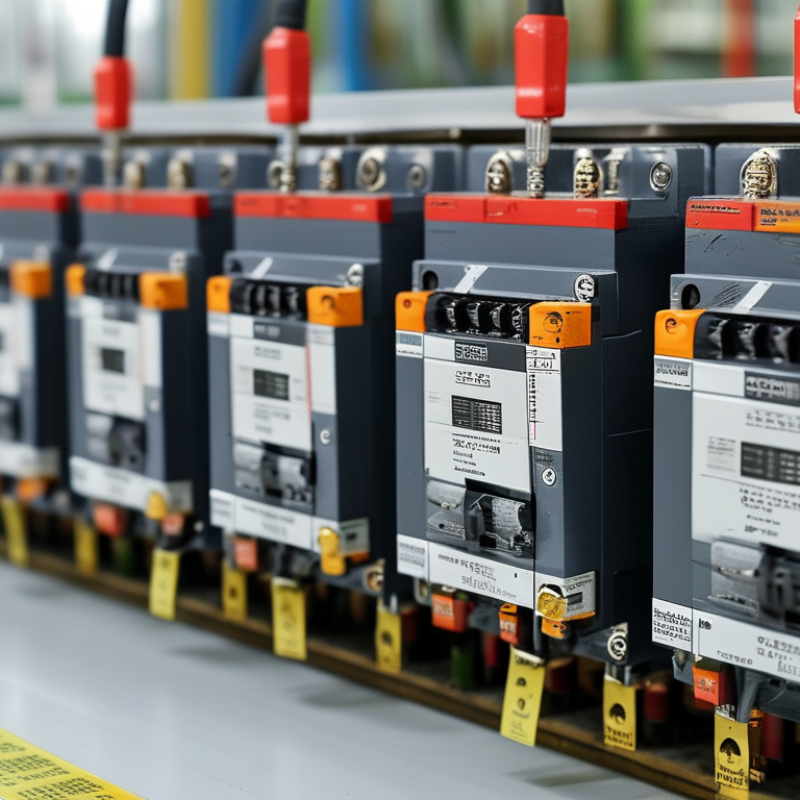
Best Miniature Circuit Breaker Manufacturers in China

What Is a Miniature Circuit Breaker and Why Does Manufacturer Choice Matter?

A miniature circuit breaker, or MCB, is a compact protective device for low-voltage electrical circuits.

It disconnects power during overloads or short circuits. Its thermal mechanism responds to sustained excess current. Its magnetic mechanism reacts quickly to severe faults. In a real distribution panel, the MCB protects cables, terminals, and connected equipment from dangerous heating.

Small device. Serious responsibility.

Manufacturer choice matters because protection depends on repeatable performance, not appearance.

Reliable Chinese manufacturers should provide clear ratings, test records, production traceability, and stable quality control. Check the rated current, pole configuration, tripping curve, and short-circuit breaking capacity. IEC 60898-1 may suit household and similar installations, while IEC 60947-2 can apply to industrial equipment. The correct standard depends on the application. A certificate alone is not enough.

During supplier evaluation, request samples from normal production, not specially prepared units.

Test terminal strength, enclosure fit, trip behavior, and marking consistency. Ask how the factory manages calibration, incoming materials, and failed products. Factory audits can reveal practical details, such as dusty assembly areas or poorly protected test equipment. That matters. No manufacturer is flawless, and low pricing can hide weaker springs, inconsistent contacts, or limited technical support. A careful buyer should compare long-term reliability, documentation, communication, and after-sales response, not only the first quotation.

Key Standards for Evaluating Chinese Miniature Circuit Breaker Manufacturers

Evaluating Chinese miniature circuit breaker manufacturers requires more than comparing prices. The IEA Electricity 2024 report forecasts global electricity demand growth of about 3.4% annually from 2024 to 2026. That expansion increases demand for dependable low-voltage protection. A capable manufacturer should design products against IEC 60898-1 and the corresponding GB/T 10963.1 requirements. Check rated current, tripping curves, short-circuit capacity, insulation voltage, and temperature performance.

Testing evidence matters. Ask for reports from accredited laboratories, not only internal inspection sheets. Production should include calibrated endurance testers, thermal trip testing, and high-current fault simulation. The 2024 Circuit Breaker Market report by Mordor Intelligence estimates the sector will maintain strong growth through 2029, with industrial upgrading supporting demand for safer products. Yet market growth can hide uneven factory capability. Certificates alone are insufficient.

Audit the quality system against ISO 9001 and verify batch traceability from copper alloy selection to final assembly. Confirm whether applicable products hold China Compulsory Certification and whether certificates match the exact model. Request sample data from at least three production batches. Look for stable contact resistance and consistent trip times. Small deviations matter.

I would also inspect mold wear, terminal torque control, and storage conditions. These details are easy to overlook. A polished factory tour proves little. One practical weakness remains: published laboratory results may not represent long-term field behavior. Require retention samples, complaint records, and corrective-action evidence before approving volume orders.

Leading Miniature Circuit Breaker Manufacturers in China

China’s leading miniature circuit breaker manufacturers combine automated production with practical engineering experience. They typically develop breakers for residential panels, commercial buildings, solar systems, and industrial control cabinets. Experienced manufacturers test thermal protection, magnetic tripping, insulation, and mechanical endurance before shipment. Small details matter, such as terminal torque, contact alignment, and the clarity of the trip indicator.

Reliable suppliers usually operate under documented quality systems, often supported by ISO 9001 procedures and applicable IEC requirements. Their laboratories may use calibrated current sources, temperature chambers, and endurance test benches. These tools help verify performance under overloads, short-circuit conditions, and repeated switching. Technical teams should also provide rated current ranges, pole configurations, tripping curves, certification records, and installation guidance. Clear documents build trust.

No factory is perfect. A strong manufacturer admits process limits and investigates rejected samples instead of hiding them. Buyers should review production consistency, batch traceability, inspection reports, and after-sales response times. Visiting a facility can reveal more than a polished catalogue: observe material storage, assembly cleanliness, test records, and worker training. Some manufacturers offer competitive prices but provide weak technical support. That difference becomes visible during commissioning. Careful sourcing still requires independent verification, because a familiar product shape does not guarantee dependable protection.

How Chinese MCB Manufacturers Compare in Quality, Price, and Customization

Chinese miniature circuit breaker manufacturers compete through quality control, pricing, and customization. Quality starts with compliance to IEC 60898-1, stable tripping performance, and reliable insulation materials. The International Electrotechnical Commission requires defined tests for overload, short-circuit interruption, and temperature behavior. In practice, better factories use automated assembly, calibrated testing benches, and batch traceability. MarketsandMarkets estimates that the global circuit breaker market will grow from about USD 8 billion in 2023 to more than USD 11 billion by 2028. This growth increases pressure on Chinese suppliers to prove consistency, not only offer low prices.

Price remains attractive, but the cheapest quotation can hide thinner copper, weaker springs, or limited testing. Export buyers should compare interruption capacity, warranty terms, test reports, and minimum order quantities. A 6 kA device and a 10 kA device are not equivalent. Customization is another strength. Many manufacturers can adjust terminal design, label printing, housing color, auxiliary contacts, and packaging. However, custom tooling may increase lead time and create quality risks. I have seen attractive samples perform well, while later batches varied slightly. That weakness deserves attention.

Tips: Request samples from three production batches. Check serial traceability and independent laboratory reports. Ask for factory audit records, not only certificates. Compare total landed cost, not unit price. The IEC 60898-1 marking should match the tested configuration. Market reports provide useful direction, but supplier-level verification remains essential.

Best Miniature Circuit Breaker Manufacturers in China

How Chinese MCB Manufacturers Compare in Quality, Price, and Customization

Quality

Quality assessment should focus on IEC 60898-1 or equivalent GB/T compliance, rated short-circuit capacity, temperature-rise performance, and documented testing.

Price

Pricing generally varies with rated current, number of poles, breaking capacity, accessories, certification requirements, order volume, and packaging specifications.

Customization

Common customization areas include B, C, or D trip curves, 1P to 4P configurations, terminal design, labeling, packaging, and auxiliary accessories.

Reference benchmark based on commonly specified modular MCB configurations aligned with IEC 60898-1 and equivalent Chinese standards. Values show typical product capability ranges rather than company-specific performance.

How to Select the Right Chinese Miniature Circuit Breaker Supplier

Choosing the Right Chinese Miniature Circuit Breaker Supplier

Selecting a Chinese miniature circuit breaker supplier requires more than comparing unit prices. Check whether the manufacturer understands your application, including voltage, current, frequency, pole configuration, and trip curve. A residential lighting circuit may need different protection from a motor control panel.

Ask for current test reports and production records. Documents should reference relevant standards, such as IEC 60898-1, when applicable to your market. Confirm short-circuit capacity, insulation performance, temperature-rise results, and mechanical endurance. A reliable supplier can explain each value without hiding behind a certificate.

Visit the factory, physically or virtually. Observe incoming material checks, automated assembly, calibration stations, and final sampling. Ask how they trace a batch from raw components to finished breakers. Samples should be tested before any large order. Test them under realistic loads, not only in a showroom.

Communication reveals technical maturity. Send a clear specification sheet and see whether the supplier identifies missing details. Good engineers ask questions about ambient temperature, enclosure space, wiring size, and installation conditions. Vague answers deserve caution.

Price is only one part of risk. A cheaper breaker may create higher inspection, replacement, or downtime costs. Still, supplier claims should be challenged. Even experienced buyers can overlook heat buildup in crowded distribution boxes. Request a pilot order, define acceptance criteria, and review failure data openly. Be careful with perfect promises. Reliable manufacturers usually acknowledge limits and explain how they control them.

FAQS

: What applications do Chinese miniature circuit breaker manufacturers commonly support?

: They produce breakers for homes, commercial buildings, solar systems, and industrial control cabinets. Different panels require different ratings, poles, and tripping curves. One size does not fit every installation.

Which quality tests should manufacturers complete before shipment?

Manufacturers should test thermal protection, magnetic tripping, insulation, and mechanical endurance. They may use calibrated current sources, temperature chambers, and switching endurance benches. Testing details matter.

Which documents should buyers request from a supplier?

Request rated current ranges, pole configurations, tripping curves, certificates, and installation instructions. Also ask for inspection reports and batch traceability records. A certificate alone proves little.

How can buyers compare breaker prices fairly?

Compare interruption capacity, warranty terms, testing coverage, minimum order quantities, and total landed cost. A 6 kA breaker is not equivalent to a 10 kA breaker. The lowest quotation may hide weaker materials or limited testing.

What customization options are commonly available?

Suppliers may customize terminals, labels, housing colors, auxiliary contacts, and packaging. Custom tooling can increase lead time and introduce production variation. Attractive samples can mislead.

How should buyers verify production consistency?

Request samples from three separate production batches. Check serial numbers, inspection records, and independent laboratory reports. Compare contact alignment, terminal torque, and trip indicators. Small defects can become expensive later.

What should a factory visit reveal?

Observe material storage, assembly cleanliness, test records, and worker training. Ask how rejected samples are isolated and investigated. A polished catalogue is not enough. Factories can still have weak processes.

How important is technical support after purchase?

Technical support helps during installation, commissioning, and fault investigation. Ask about response times, replacement procedures, and troubleshooting documents. Some suppliers offer good prices but limited assistance. That weakness often appears later.

Conclusion

Choosing the right Miniature Circuit Breaker manufacturer in China is essential for ensuring electrical safety, stable performance, and long-term product reliability. A Miniature Circuit Breaker protects circuits from overloads and short circuits, so buyers should evaluate manufacturers according to product quality, production capability, testing procedures, certifications, and compliance with recognized international and regional standards. A dependable supplier should also demonstrate consistent quality control, transparent technical documentation, and experience serving different electrical applications.

Chinese manufacturers may differ in price, quality, delivery capacity, and customization options. Some focus on cost efficiency, while others provide advanced materials, precise manufacturing, flexible configurations, and stronger technical support. To select the right supplier, buyers should compare product specifications, safety performance, factory capabilities, minimum order requirements, communication efficiency, warranty terms, and after-sales service. A thorough evaluation helps ensure that the selected manufacturer can provide reliable products, competitive value, and solutions suited to specific project requirements.


Madeline

Madeline

Madeline is a dedicated marketing professional with a wealth of expertise in our company's core offerings. With a keen understanding of the industry, she brings a unique perspective to her role, consistently delivering high-quality content that highlights the superior aspects of our products. As......