China’s Smart Circuit Breaker market is moving from basic protection toward connected, measurable power management. Devices now combine overload protection, remote switching, temperature alerts, and energy monitoring. A 63A DIN-rail breaker may send an abnormal-current warning before a factory line stops. That small signal can prevent expensive downtime.
Market research supports this shift. Grand View Research identifies smart electricity infrastructure as a major growth area, driven by connected buildings, renewable energy, and digital distribution networks. MarketsandMarkets also reports rising demand for intelligent circuit protection within smart-grid and industrial automation projects. These reports differ in scope and definitions. Their figures should not be treated as perfectly comparable. That is an important limitation.
Professor Saifur Rahman, a recognized smart-grid researcher, has stated, “The smart grid is not just about technology; it is about people and processes.” His observation applies directly to Smart Circuit Breaker selection. Reliable hardware still needs trained installers, clear settings, secure communication, and practical maintenance. Compliance also matters. Serious manufacturers design around standards such as IEC 60947-2, IEC 60898-1, and UL 489, depending on the target market.
This China Top 10 Smart Circuit Breaker Manufacturers guide examines more than production volume. It considers certification, factory capability, monitoring functions, response speed, after-sales support, and application experience. Some rankings remain subjective. They should. A residential installer may value simple app control, while a data center needs selective coordination and dependable records. The best supplier is not always the largest one. It is the one that performs consistently where the breaker is actually installed.
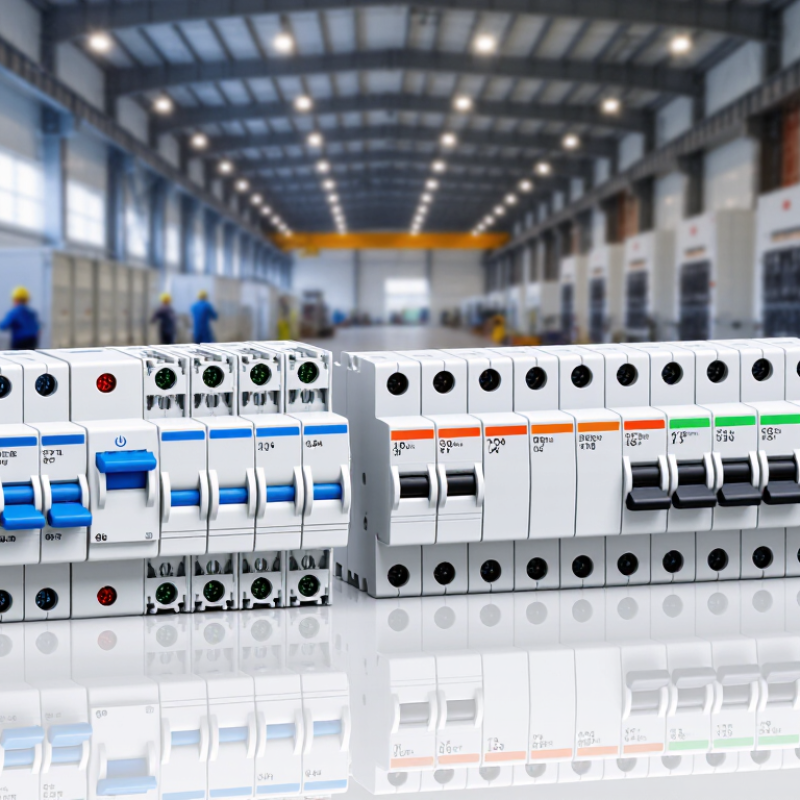
Smart circuit breakers combine traditional electrical protection with sensing, communication, and software control. A conventional breaker trips when excessive current creates dangerous heat. A smart breaker also measures current, voltage, power, and sometimes temperature. Small sensors collect these readings inside the enclosure. A control chip then compares them with programmed safety limits.
When abnormal conditions appear, the breaker can disconnect the circuit within a controlled response time. It may detect overloads, short circuits, leakage, or unusual energy patterns. Afterward, users can view the event through a local screen, mobile interface, or building management system. Remote switching is also possible, but it should require secure access and clear operating permissions. A technician can check a workshop circuit without standing beside the panel. That convenience matters during maintenance.
In practical installations, accurate wiring remains more important than a polished interface. Incorrect neutral connections can distort measurements. Weak network signals may delay notifications. Software settings can also create false confidence. Smart breakers still need suitable ratings, regular testing, and professional installation. During inspections, an electrician should compare displayed readings with a calibrated meter. The two values may not match perfectly. That difference deserves investigation, not immediate dismissal. A useful device records faults clearly, responds predictably, and keeps operating when communication fails. “Smart” should support protection, not replace electrical judgment.
China Top 10 Smart Circuit Breaker Manufacturers?
How to Evaluate Smart Circuit Breaker Manufacturers in China
Evaluating smart circuit breaker manufacturers requires more than comparing online prices. Examine factory experience, engineering staff, production capacity, and export records. A reliable supplier should provide clear technical drawings, test reports, and traceable component information. Ask for raw data.
Request samples from each shortlisted manufacturer. Test overload protection, remote switching, temperature rise, communication stability, and power measurement accuracy. A workshop visit can reveal useful details: automated assembly, calibrated testing equipment, controlled storage, and labeled production batches. Photos are not enough.
Check compliance with relevant IEC or national standards, depending on the target market. Confirm whether reports come from accredited laboratories rather than internal departments. Review firmware update methods, data protection, user permissions, and failure recovery. Cybersecurity is often treated as an afterthought. It should not be.
Study the warranty terms carefully. Ask how defective units are analyzed, replaced, and recorded. Speak with existing industrial customers, while remembering that references may show only the best results. A pilot order can expose unstable communication, unclear manuals, or inconsistent factory inspection. Samples can mislead.
Manufacturers should explain their quality-control points, from incoming materials to final electrical testing. They should also identify design limitations instead of promising perfect performance. That honesty matters. A supplier that accepts technical questions, documents corrective actions, and supports installation training is easier to trust over time.
China’s Top 10 Smart Circuit Breaker Manufacturers are gaining attention in residential, commercial, and industrial power management. These manufacturers typically combine thermal-magnetic protection with remote monitoring, overload alerts, and automatic switching. Their products may support Wi-Fi, cellular networks, Bluetooth, or industrial communication protocols.
A reliable evaluation should begin with factory experience, not advertising claims. Check production records, electrical safety testing, relay endurance, enclosure quality, and firmware update controls. Manufacturers with strong engineering teams often provide clear wiring diagrams and fault records.
Independent testing against relevant IEC or national standards also matters. Ask for test reports, sample units, and performance data under high temperature, humidity, and frequent switching.
The best ten suppliers may differ by application. One factory may produce compact breakers for apartments, while another focuses on three-phase systems and energy management. Look closely at rated current accuracy, remote response time, data security, and after-sales support. A low-cost device can become expensive when troubleshooting is difficult. Real projects also reveal weaknesses. A stable connection in a showroom may fail inside a concrete electrical cabinet. No ranking remains permanent. Manufacturing capacity, software quality, and compliance records can change each year. Buyers should compare recent evidence instead of trusting a fixed list.
China’s leading smart circuit breaker manufacturers focus on practical products for homes, factories, solar systems, and electric vehicle charging points. Their ranges commonly include DIN-rail breakers, residual current devices, molded-case breakers, and compact energy monitors. Many models combine overload protection, short-circuit interruption, leakage detection, and remote switching. Some units support Wi-Fi or Bluetooth, while industrial versions often use RS-485 and Modbus communication.
The strongest technology is not always the most visible. Accurate current sensing, stable firmware, and reliable trip mechanisms matter more than a polished mobile app. Advanced products can record voltage, current, power factor, and abnormal temperature changes. They may also send alerts before a small fault becomes a panel shutdown. In factories, these breakers connect with energy management systems and maintenance platforms. In homes, they help users isolate a water heater or charging circuit from a phone. However, cloud dependence can create delays or privacy concerns. I have seen impressive dashboards fail when network signals became unstable. That weakness deserves honest testing.
Tips: Check rated current, breaking capacity, pole configuration, and communication method before buying. Confirm compatibility with IEC 60898-1 or IEC 60947-2 requirements. Test manual operation too. Do not trust remote control alone. A qualified electrician should verify wiring, enclosure space, and heat buildup, especially in dense distribution boards. Local temperature and installation quality can affect long-term performance.
Choosing a Chinese smart circuit breaker manufacturer requires more than comparing factory prices. Start with the application, such as residential panels, factories, or solar installations. Ask for rated current, breaking capacity, voltage range, communication options, and operating temperature. A reliable supplier should provide test reports, wiring diagrams, sample records, and clear certification details. Request recent documents. Do not accept screenshots alone.
During supplier evaluation, inspect production controls as carefully as the product itself. Check incoming material records, calibration labels, assembly instructions, and final inspection data. Ask whether each breaker carries a traceable batch code. This small detail matters during a field failure. Review Modbus, Wi-Fi, or other communication functions with your actual control system. Test the device under heat, overload, repeated switching, and unstable network conditions. Demos can mislead.
Commercial terms deserve equal attention. Confirm warranty length, replacement procedures, firmware support, spare parts, and response times. Ask whether cloud functions can be disabled and whether local control remains available. Some factories promise customization too quickly. That is not enough. Request engineering drawings and a small pilot order before committing to volume. A polished website is not proof of manufacturing depth. A supplier that openly admits product limits may be more dependable than one claiming perfection. Evaluate the factory’s quality system, technical staff, and after-sales records together, not separately.
A standards-based comparison framework for evaluating Chinese smart circuit breaker suppliers without relying on company or brand names.
| No. | Evaluation Dimension | What to Verify | Relevant Technical Reference | Recommended Acceptance Benchmark | Why It Matters |
|---|---|---|---|---|---|
| 1 | Product Safety Compliance | Confirm that the product documentation, markings, test reports, and conformity declarations match the exact model being supplied. | IEC 60898-1 for household and similar overcurrent circuit breakers; IEC 60947-2 for certain industrial circuit breakers. | Model-specific third-party test documentation and traceable production records. | Compliance evidence reduces electrical, customs, installation, and liability risks. |
| 2 | Rated Current Range | Check available ratings, pole configurations, voltage ratings, and whether the supplier can provide the required distribution-board formats. | Product rating must be stated on the nameplate and technical datasheet. | Required current, poles, frequency, and voltage are clearly defined before quotation. | A correct rating is essential for overload protection and system compatibility. |
| 3 | Short-Circuit Breaking Capacity | Compare the rated short-circuit capacity with the prospective fault current at the installation point. | Common miniature circuit breaker values include 4.5 kA, 6 kA, or 10 kA, depending on the product and market. | Select a breaking capacity equal to or higher than the calculated installation fault level. | Insufficient breaking capacity can create severe equipment and personal-safety hazards. |
| 4 | Smart Communication Functions | Verify energy measurement, remote switching, fault notifications, scheduling, local manual control, and communication interfaces. | Common options include Wi-Fi, Bluetooth, Zigbee, RS-485, Modbus, or gateway-based communication. | Communication protocol, data points, API or gateway requirements, and operating distance are documented. | Clear communication specifications prevent integration problems with building-management or energy platforms. |
| 5 | Measurement Accuracy | Check whether the device measures voltage, current, active power, power factor, energy consumption, and alarm conditions. | Accuracy should be stated for the relevant measurement range and operating temperature. | Use a product whose stated accuracy meets the intended monitoring purpose and local metering requirements. | Accurate data is necessary for energy analysis, billing support, and load-management decisions. |
| 6 | Thermal and Environmental Performance | Review ambient-temperature limits, humidity requirements, altitude limitations, enclosure protection, and heat dissipation. | Typical low-voltage devices specify an operating temperature range and installation conditions in the datasheet. | Environmental limits are suitable for the actual panel, climate, altitude, and installation location. | Smart electronics and protective mechanisms can be affected by heat, moisture, dust, and poor ventilation. |
| 7 | Production Quality Control | Ask about incoming-material inspection, automated assembly, calibration, dielectric testing, trip testing, and final inspection. | Quality systems may be assessed against ISO 9001, while product tests should follow the applicable product standard. | Documented inspection procedures, batch records, serial-number traceability, and retention samples. | Consistent manufacturing controls are more reliable than appearance or marketing claims alone. |
| 8 | Customization and Engineering Support | Evaluate support for private labeling, firmware configuration, communication integration, packaging, terminal arrangements, and sample modifications. | Customization should be controlled through drawings, specifications, firmware versions, and engineering-change records. | Written approval process for samples, production changes, and software or hardware revisions. | Controlled customization helps ensure that mass-produced units match approved samples. |
| 9 | Supply Capacity and Lead Time | Verify production capacity, minimum order quantity, sample lead time, regular production lead time, and component availability. | Lead time should be confirmed in a written purchase or production schedule. | Stable delivery performance supported by capacity planning and realistic inventory commitments. | Reliable supply is important for projects involving multiple sites or recurring replenishment. |
| 10 | Warranty and After-Sales Service | Review warranty duration, replacement procedures, troubleshooting support, firmware updates, spare parts, and technical documentation. | Warranty terms should identify coverage, exclusions, claim evidence, response time, and logistics responsibility. | Written service-level commitments and support available in the buyer’s working language and time zone. | Responsive support lowers downtime and simplifies maintenance after installation. |
Buyer guidance: Request a model-specific datasheet, conformity documentation, sample unit, communication test, factory-quality records, and a written quotation before making a final supplier decision. Always verify local electrical regulations and have the installation assessed by a qualified professional.
Review factory experience, engineering staff, production capacity, and export records. Request technical drawings, test reports, and traceable component information. Ask for raw data.
Samples reveal overload protection, remote switching, temperature rise, and power measurement accuracy. Test repeated switching and unstable network conditions. Demonstrations can mislead.
Look for automated assembly, calibrated testing equipment, controlled storage, and labeled production batches. Photos are not enough. Inspect real processes.
Check rated current, breaking capacity, voltage range, pole configuration, and operating temperature. Confirm communication compatibility with your control system. Manual operation matters too.
Ask for incoming material records, calibration labels, assembly instructions, and final inspection data. Each unit should have a traceable batch code. This helps during field failures.
Confirm compliance with relevant IEC or national standards for the target market. Check whether accredited laboratories issued the reports. Screenshots alone are weak evidence.
Ask about firmware updates, user permissions, data protection, and failure recovery. Check whether local control works without cloud access. Network loss can expose hidden weaknesses.
Confirm warranty length, replacement procedures, spare parts, response times, and defect analysis. Ask for corrective-action records. Promises are not enough.
Yes, a small pilot can reveal unstable communication, unclear manuals, and inconsistent inspection. It may still miss every problem. Keep testing.
This article provides a practical overview of the Smart Circuit Breaker industry in China, explaining how these devices combine circuit protection with digital monitoring, remote control, energy measurement, and automated fault management. It introduces their typical communication methods, operating principles, and applications in homes, commercial buildings, factories, and intelligent energy systems. Readers will also learn which technical features matter most, including safety performance, overload and short-circuit protection, connectivity, software compatibility, data accuracy, and ease of installation.
The article then presents a structured review of China’s top 10 Smart Circuit Breaker manufacturers without focusing on brand promotion. It compares their key product categories, technological capabilities, production standards, customization services, and application experience. Finally, it offers practical guidance for selecting a suitable supplier by considering certifications, quality control, research and development strength, delivery capacity, after-sales support, and total cost. This approach helps buyers identify reliable manufacturing partners for different electrical control and energy management requirements.

OFA Electrical