Electricity networks are expanding, modernizing, and becoming more dependent on reliable medium-voltage protection. The International Energy Agency’s Electricity 2024 report projects global electricity demand growth of about 3.4% annually from 2024 to 2026. That increase creates fresh demand for dependable switching equipment, especially in utilities, factories, rail systems, renewable projects, and data centers.
A Vacuum Circuit Breaker uses vacuum interruption technology to extinguish electrical arcs quickly and reduce maintenance requirements. Its value is practical. A technician may inspect a compact panel, check mechanical travel, and verify insulation performance without handling oil-filled equipment. However, product quality depends on more than interruption ratings. Engineers also examine short-circuit capacity, operating endurance, environmental performance, digital monitoring, service support, and compliance with IEC 62271-100.
This overview examines ten influential Vacuum Circuit Breaker manufacturers worldwide. The selection considers product breadth, installed experience, testing capability, regional reach, and evidence from technical documentation. Market research from Grand View Research, MarketsandMarkets, and Fortune Business Insights indicates continued growth in global switchgear and circuit-breaker demand, although their market boundaries and forecasts differ. That difference matters.
No ranking is perfectly objective. A manufacturer strong in European utility projects may not lead in Asian industrial applications. Pricing, delivery networks, local certifications, and lifecycle support can change the practical result. Therefore, this list should support technical screening, not replace factory audits or protection studies. Buyers should compare verified test reports, reference installations, warranty terms, and after-sales response before making a final decision. The strongest supplier is not always the most famous one. Sometimes, the quiet details decide performance.
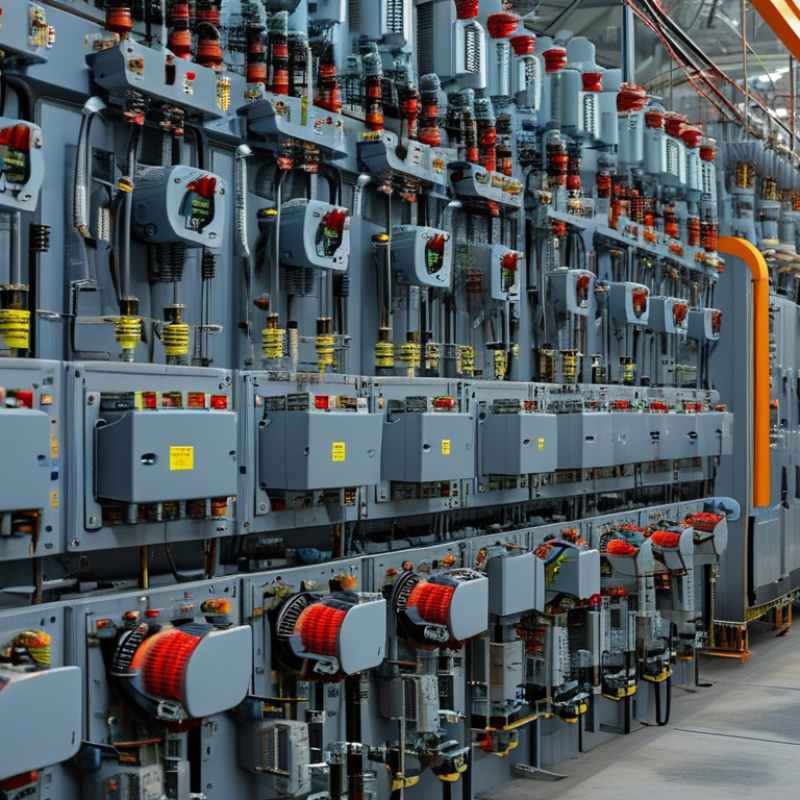
A vacuum circuit breaker uses a sealed vacuum interrupter to stop current during faults. When its contacts separate, the metal vaporizes briefly and forms an arc. The vacuum then removes charged particles quickly, helping the arc extinguish near the next current zero.
Its main structure includes fixed and moving contacts, a ceramic or glass envelope, metal bellows, arc shields, and an operating mechanism. Typical medium-voltage units serve 6.6–40.5 kV systems, with interrupting ratings often reaching 16–40 kA. Actual values depend on the design and test class. IEC 62271-100 defines key requirements for high-voltage alternating-current circuit breakers. The IEA Electricity 2024 report expects global electricity demand to grow by about 4% annually through 2026. That growth increases pressure on reliable switching equipment, especially in compact substations.
Tips: Check the rated voltage, short-circuit current, insulation level, and mechanical endurance together. A high interrupting rating alone proves little. Field inspection should examine contact wear, vacuum integrity, stored-energy mechanisms, and control wiring. Maintenance records matter. I still find simplified diagrams misleading. They often hide the effect of contact geometry and arc control. CIGRE technical guidance also stresses application-specific testing, not catalogue comparison alone. Engineers should verify temperature rise, making current, breaking time, and surge behavior under the actual network conditions. The perfect specification rarely exists. Cost, space, switching frequency, and maintenance access must be balanced.
| No. | Technical Dimension | Typical Industry Value or Specification | Definition, Structure, or Operating Principle | Engineering Note |
|---|---|---|---|---|
| 1 | Primary Application | Medium-voltage AC distribution and industrial switching | A vacuum circuit breaker interrupts alternating current by separating contacts inside a sealed vacuum interrupter. | Commonly installed in indoor and outdoor switchgear, substations, motor-control systems, and industrial distribution networks. |
| 2 | Rated Voltage Range | Typically 3.6 kV to 40.5 kV for medium-voltage equipment | The insulation system, contact spacing, vacuum interrupter, and external clearances are designed for the specified power-frequency and impulse withstand levels. | The exact rating depends on the applicable standard, system insulation level, enclosure design, and installation environment. |
| 3 | Rated Continuous Current | Common ratings include 630 A, 1,250 A, 2,000 A, and 3,150 A | Current flows through the main contacts and flexible conductors while thermal design limits temperature rise during continuous operation. | Higher ratings are available in specialized switchgear; conductor size, contact resistance, and cooling affect the final rating. |
| 4 | Short-Circuit Breaking Current | Typical medium-voltage values range from 16 kA to 40 kA | When a fault occurs, the contacts open and the vacuum arc is extinguished near the natural current zero of the AC waveform. | The breaker must be selected according to the calculated prospective short-circuit current and the required making and breaking duty. |
| 5 | Vacuum Interrupter | Factory-sealed high-vacuum chamber with no external arc-quenching gas | The interrupter contains fixed and moving contacts, a ceramic or glass insulating envelope, metal end caps, and a metal bellows for motion transfer. | The sealed chamber helps prevent contamination and eliminates the need for routine gas replenishment. |
| 6 | Contact Materials and Geometry | Copper-chromium contact alloys are widely used | Contacts are shaped to control the vacuum arc, distribute current, reduce localized heating, and limit contact erosion during fault interruption. | Contact design influences dielectric recovery, chopping current, welding resistance, and electrical endurance. |
| 7 | Operating Mechanism | Spring-stored-energy mechanism is the most common arrangement | A motor or manual handle charges a closing spring; tripping releases stored energy to open the contacts rapidly through an operating linkage. | The mechanism may include anti-pumping, mechanical interlocking, position indication, and undervoltage or shunt release accessories. |
| 8 | Arc Interruption Process | Interruption occurs at or close to the natural current zero | After contact separation, metal vapor forms a temporary arc. At current zero, the vapor rapidly condenses and the vacuum restores dielectric strength across the contact gap. | Fast dielectric recovery is a key reason vacuum interrupters are effective for medium-voltage fault clearing. |
| 9 | Switching Performance | Opening and closing operations generally occur within tens of milliseconds | A trip signal activates the release mechanism, while the opening spring drives the moving contact to the required gap and the damper controls end-of-travel motion. | Actual operating time, bounce, pole simultaneity, and endurance are product-specific and must be verified from certified test data. |
| 10 | Maintenance and Service Life | Low routine maintenance; mechanical and electrical endurance are separately specified | Because the interrupter is sealed, maintenance focuses on mechanism lubrication, insulation inspection, contact-wear assessment, operating-time checks, and vacuum integrity testing where required. | Service life depends on switching frequency, fault duty, environmental conditions, mechanism condition, and compliance with the applicable maintenance schedule. |
: It is a switching device that uses a sealed vacuum interrupter to stop fault current. When contacts separate, a brief metal-vapor arc appears. The vacuum removes charged particles quickly, helping the arc extinguish near current zero.
Its main parts include fixed contacts, moving contacts, and a ceramic or glass envelope. Metal bellows maintain the seal during contact movement. Arc shields control contamination and electric stress. An operating mechanism moves the contacts.
Medium-voltage units commonly serve 6.6–40.5 kV systems. Interrupting ratings often range from 16–40 kA. Actual values depend on design, testing, and application conditions. Numbers alone prove little.
Compare rated voltage, frequency, continuous current, and breaking current. Also check short-time withstand current and insulation level. Recovery voltage and transient recovery voltage affect interruption performance. Mechanical endurance matters too.
Not by itself. A high rating may hide unsuitable insulation, timing, or switching performance. Check making current, breaking time, temperature rise, and surge behavior. The network’s actual fault conditions should guide the decision.
Inspect contact wear, vacuum integrity, and stored-energy mechanisms. Review control wiring, auxiliary contacts, trip-coil monitoring, and operation counts. Check timing records and insulation resistance. Maintenance records often reveal problems early.
Dust, humidity, vibration, altitude, and outdoor exposure can change performance. A compact indoor unit may not suit a coastal installation. Frequent switching also increases mechanical wear. Installation space and maintenance access deserve equal attention.
Request verified test certificates and documented operating history. Check spare-part availability, warranty terms, service response, and commissioning support. Confirm compatibility with the switchgear and operating frequency. A simple ranking can mislead. No perfect specification exists.
This article provides a practical overview of the global vacuum circuit breaker market, beginning with the definition, internal structure, and operating principles of a Vacuum Circuit Breaker. It explains how vacuum interrupters extinguish electrical arcs, improve switching reliability, and support safer power distribution. The article also compares key international ratings and performance factors, including voltage level, current capacity, short-circuit interruption capability, insulation performance, mechanical endurance, and environmental adaptability.
It then presents ten leading categories of manufacturers worldwide without focusing on specific brand names, highlighting their technical capabilities, product ranges, manufacturing strengths, and service coverage. Major applications in utilities, industrial facilities, renewable energy systems, transportation, commercial buildings, and infrastructure are also discussed. Finally, the article offers practical guidance for selecting a suitable manufacturer and product by considering system requirements, certification, lifecycle cost, maintenance support, customization options, delivery capability, and long-term reliability.

 OFA Electrical