Choosing the right Generator Circuit Breaker begins with the generator, not the catalog.
Dr. J. C. Das, a respected power-system protection specialist, states, “Protection must match the equipment’s real operating conditions, not only its nameplate.” This principle is easy to overlook. A breaker may carry the generator’s rated current yet fail during a severe fault. The selection process must examine generator voltage, subtransient reactance, fault current, interrupting time, and transient recovery voltage. These values shape the breaker’s true duty.
Small details matter.
Imagine a 13.8 kV generator feeding a metal-clad switchgear lineup. During a fault, the breaker must interrupt high current quickly while controlling recovery voltage across its contacts. Its short-circuit rating, closing capability, insulation level, and mechanical endurance must suit that environment. Ambient temperature, altitude, enclosure design, and maintenance access also deserve attention. A technically correct breaker can still become a poor choice when heat, dust, or limited service space is ignored.
The right Generator Circuit Breaker should coordinate with excitation systems, relays, transformers, and downstream equipment. Standards such as IEC 62271-37-013 or relevant IEEE requirements provide essential guidance, but field conditions remain decisive. Manufacturer test data should be reviewed carefully. One imperfect assumption can affect an entire protection scheme. This guide explains the key ratings, application checks, and practical questions that help engineers choose with greater confidence and fewer costly surprises.
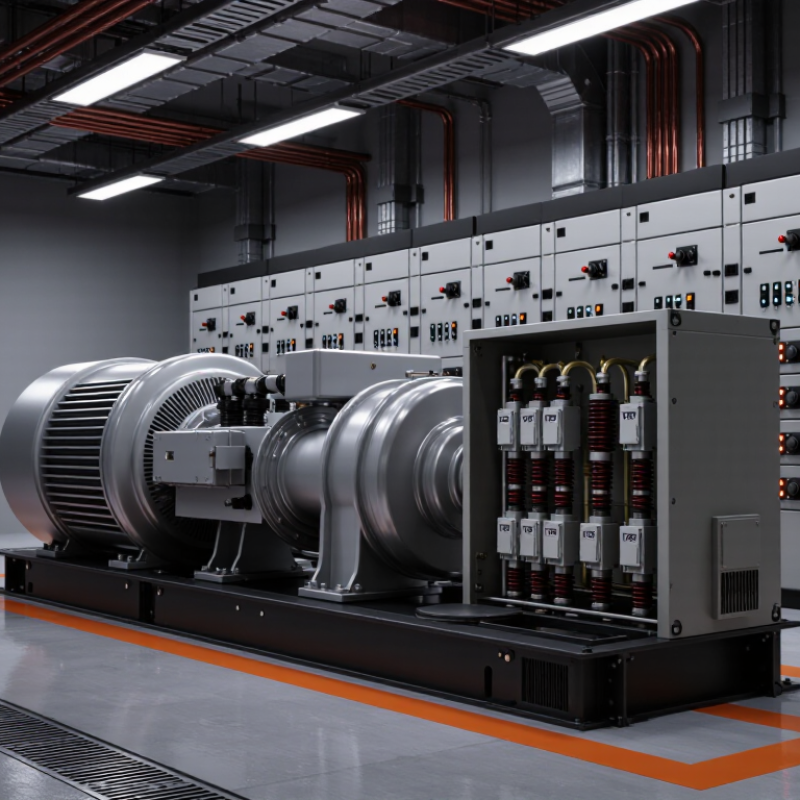
How to Choose the Right Generator Circuit Breaker?
A generator circuit breaker is more than an on-off switch. It protects the generator, cables, and connected equipment from excessive current. During a short circuit, it should interrupt the fault before heat damages insulation or terminals. It also helps isolate the generator during inspection or maintenance. This separation reduces accidental energizing. The correct device must match the generator’s voltage, current, fault level, and grounding arrangement. A rating that looks close may still be wrong.
A useful inspection habit is comparing the breaker rating with the generator nameplate and cable size. Check whether the breaker supports continuous loading and motor starting current. Undersizing may cause nuisance trips. Oversizing is more dangerous. A cable could overheat before the breaker responds. The interrupting rating must also exceed the available fault current. That detail is often missed.
Installation should follow applicable electrical codes and the generator manufacturer’s technical data. An experienced electrician should verify connections, torque, insulation, and protective coordination. Test it under controlled conditions. Do not rely on appearance alone. A breaker can look correct while its settings remain unsuitable. I would also review the load profile after commissioning, because real equipment rarely behaves exactly like a calculation. A written test record improves accountability and future maintenance.
How to Choose the Right Generator Circuit Breaker?
Identifying generator voltage, current, and fault ratings prevents costly protection errors. Start with the generator nameplate, not an estimated load list. A 400-volt, three-phase generator rated at 500 kVA delivers about 722 amperes at unity power factor. Real loads often use a 0.8 power factor, changing the practical current calculation. Confirm the manufacturer’s rated voltage, frequency, phase arrangement, and continuous output.
The breaker’s continuous-current rating should match the generator conductors and expected load. Its interrupting rating must exceed the available short-circuit current at the installation point. IEEE 3002.3-2018 recommends a documented short-circuit study, while IEC 60909-0 provides calculation methods for fault current. NFPA 70, 2023, Article 445, also addresses generator overcurrent protection. Do not assume a large generator creates unlimited fault current. Many generator alternators produce lower, shorter-duration fault current than utility sources. That detail can complicate breaker selection.
Tips: Record voltage, kVA, power factor, and alternator reactance before choosing the breaker. Ask for the manufacturer’s maximum prospective fault current. Compare it with the breaker’s interrupting rating and the assembly’s short-circuit current rating. Check temperature and altitude derating, too. Field measurements can reveal mismatches, but they are not a substitute for an engineered study. One common mistake is sizing only for running current; motor starting current may trip the breaker unexpectedly. Recheck the calculations.
This reference compares typical three-phase, 480 V generator ratings. Full-load current is calculated as kVA × 1,000 ÷ (√3 × voltage). Select a breaker with a continuous current rating at or above the generator output, then verify that its interrupting rating exceeds the available fault current at the installation point. Final selection must be confirmed using the generator nameplate, conductor ampacity, system grounding, and a fault-current study.
Selecting a generator circuit breaker begins with rated voltage, full-load current, frequency, and available short-circuit current. The breaker must interrupt faults safely, not merely carry normal load. During field inspections, I check the nameplate, cable size, enclosure temperature, and neutral arrangement. Small details matter. A warm panel can change assumptions.
Breaker type depends on fault level, switching duty, and maintenance needs. A molded-case breaker suits many smaller low-voltage generators. Larger units may need an insulated-case or power circuit breaker with adjustable protection and higher endurance. Thermal-magnetic trips are simple and dependable. Electronic trips provide precise long-time, short-time, instantaneous, and ground-fault settings. More adjustment is not always better.
Trip characteristics should coordinate with downstream breakers while protecting the alternator. Generator fault current may decay quickly. An instantaneous setting suited to utility power can nuisance-trip on a generator. Review time-current curves, generator subtransient data, and calculated fault current. Set long-time protection near the conductor and generator limits. Then verify short-time and ground-fault delays. I once trusted a default setting too much; testing exposed the error. Verify operation through secondary injection or an approved functional test. Local electrical codes and technical documentation remain decisive.
Choosing a generator circuit breaker starts with the generator’s rated current, not its maximum appliance count. For a three-phase system, estimate current with this formula: kW × 1,000 ÷ (1.732 × voltage × power factor). A 100 kW generator at 400 volts and 0.8 power factor produces about 180 amps. A 200-amp breaker may fit, but only after checking the generator nameplate, conductor ampacity, and fault-rating requirements.
Connected loads need closer attention. HVAC compressors, pumps, and motors can draw five to seven times their running current during startup, according to guidance reflected in IEEE motor-system practices. That surge may trip an otherwise suitable breaker. NFPA 110 also requires emergency power systems to support intended loads and starting demands, not merely their steady-state wattage. Separate essential circuits where possible. Refrigeration, fire pumps, controls, and lighting should not compete unnecessarily with large motors.
Field measurements are valuable. I have seen a panel appear comfortably sized until a compressor started. The voltage dipped, and the calculation looked too optimistic. Use recorded starting current when available. The U.S. Energy Information Administration’s Commercial Buildings Energy Consumption Survey shows that space conditioning and lighting remain major building energy uses, so connected-load profiles vary widely. Do not copy a table blindly. Apply NEC Article 445, confirm the breaker’s interrupting rating, and leave practical capacity for future loads. A smaller breaker can be unsafe; an oversized one may fail to protect the generator.
Choosing a generator circuit breaker starts with the installation, not the catalog. Confirm voltage, frequency, continuous current, fault current, pole count, and enclosure rating. The breaker’s interrupting capacity must exceed the available generator fault current. Generator fault current can be lower than utility fault current, which makes coordination less obvious.
NFPA’s Electrical Fires report estimated 32,280 U.S. home fires involving electrical distribution and lighting equipment each year from 2016 to 2020. These fires caused about 470 deaths, 1,100 injuries, and 1.3 billion dollars in property damage. The figures are not generator-specific, but they show why loose terminals, overloaded conductors, and poor protection deserve attention. NFPA 70 requires suitable overcurrent protection, grounding, and installation methods. IEEE 242 also supports a study-based approach to selective coordination. Review the generator, automatic transfer switch, feeder breakers, and downstream devices as one system. A breaker that trips too quickly can shut down critical loads. One that trips too slowly can increase equipment damage.
Tips: Request the generator submittal, short-circuit data, and time-current curves. Check whether the neutral must be switched. Verify grounding and bonding at the transfer equipment. Test the trip settings after commissioning. Field conditions often differ from drawings, and this is where neat plans become imperfect reality. Do not rely on a default breaker setting. Have a qualified engineer review coordination and arc-flash risks before energization.
Confirm voltage, frequency, continuous current, available fault current, pole count, and enclosure rating. Check the nameplate and cable size. Small details matter.
Molded-case breakers suit many smaller low-voltage generators. Larger units may need insulated-case or power breakers with adjustable protection and greater endurance. The catalog alone cannot decide.
It is the fault current a breaker can safely interrupt. Its rating must exceed the available generator fault current. Do not assume utility fault levels apply.
Generator fault current may decay quickly. A setting suited to utility power might trip unnecessarily on generator supply. Review time-current curves and generator fault data.
Coordinate long-time, short-time, instantaneous, and ground-fault settings with downstream breakers. Protect conductors and the generator. More adjustment is not always better.
Review the generator, transfer switch, feeder breakers, and downstream devices as one system. Confirm whether the neutral should be switched. Verify grounding and bonding.
Compare settings with approved calculations, then use secondary injection or an approved functional test. Field conditions can differ from drawings. I once trusted a default too much.
Ask a qualified engineer to review coordination and arc-flash risks. Check terminals, conductor loading, and enclosure temperature. A warm panel can change assumptions.
Selecting the right Generator Circuit Breaker is essential for protecting the generator, connected equipment, and electrical system from overloads and short circuits. Begin by understanding the breaker’s role in isolating the generator and interrupting abnormal current safely. Confirm the generator’s operating voltage, full-load current, available fault current, and required interrupting rating before making a selection. These values ensure the breaker can operate reliably under both normal and fault conditions.
Next, choose a breaker type and trip characteristics that suit the generator and the connected loads, considering motor starting currents and other temporary surges. The breaker size should coordinate with the generator’s rated output while providing effective protection without unnecessary tripping. Finally, review installation requirements, conductor sizing, grounding, protection coordination, accessibility, and applicable electrical safety standards. A properly selected and installed Generator Circuit Breaker improves system reliability, simplifies maintenance, and helps ensure safe operation throughout the generator’s service life.

OFA Electrical