China Best Air Circuit Breaker Suppliers for Global Buyers

Time:2026-09-10 Author:Aria
0%

Selecting China’s best Air Circuit Breaker suppliers requires more than comparing prices. Global buyers must examine technical capability, factory experience, testing procedures, and service reliability. A dependable supplier should provide clear ratings, verified certificates, routine test reports, and traceable production records. These details matter when a breaker protects a busy factory, a data center, or a large commercial building.

Electrical safety author John Cadick explains the essential purpose clearly: “The purpose of a circuit breaker is to interrupt current when the current exceeds a safe value.” This principle remains simple, but supplier evaluation is not. Buyers should review rated voltage, rated current, short-circuit breaking capacity, insulation performance, trip-unit accuracy, and mechanical endurance. Product samples should match the final production model. That point is often missed.

Look beyond polished catalogs.

Leading Chinese manufacturers may offer customized Air Circuit Breaker solutions, including draw-out designs, electronic protection units, communication interfaces, and auxiliary contacts. However, attractive specifications do not automatically prove field reliability. Factory audits, witness testing, and customer references provide stronger evidence. Buyers should also confirm compliance with relevant IEC or regional requirements before placing large orders.

This guide introduces practical methods for comparing Chinese suppliers. It considers manufacturing depth, quality control, export experience, documentation, lead times, spare parts, and technical support. Some suppliers may appear excellent during the first inquiry, yet respond slowly after installation. That is a warning sign. A careful buyer should ask difficult questions early, because reliable protection equipment cannot depend on promises alone. Our evaluation is practical, but not perfect. Site conditions, grid behavior, and maintenance standards can change the final decision.
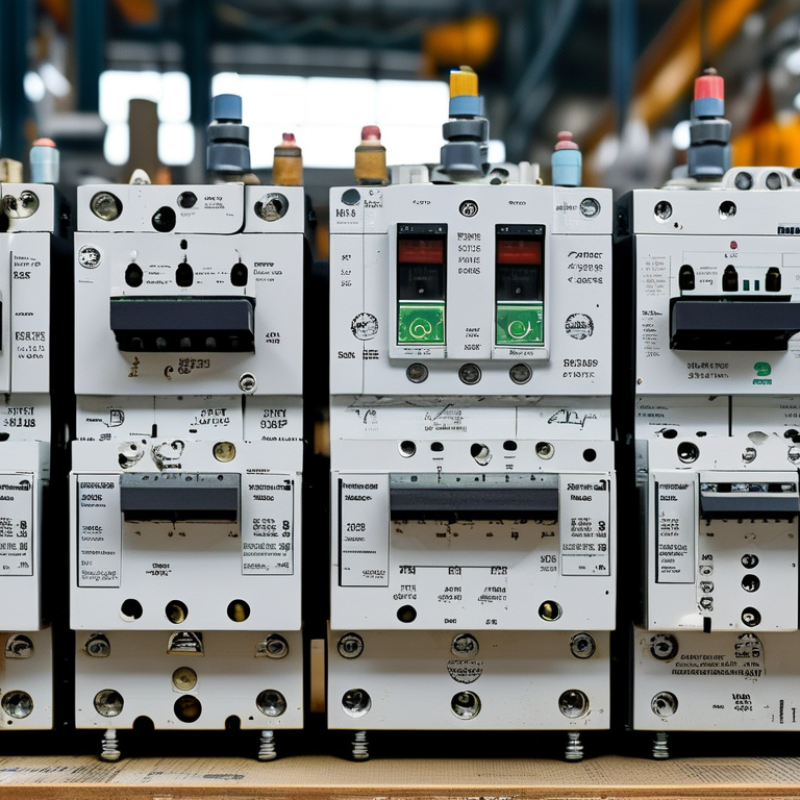
China Best Air Circuit Breaker Suppliers for Global Buyers

Air Circuit Breakers Explained: IEC 60947-2, 50/60 Hz, and 630–6,300 A

Air circuit breakers protect low-voltage distribution systems by interrupting current through air. IEC 60947-2 defines essential requirements for construction, testing, ratings, and performance. Global buyers should verify the declared Icu and Ics values, not only the frame size. A 630 A breaker may suit a compact feeder, while a 6,300 A unit demands stronger busbars, supports, and heat management. That range matters.

Frequency is equally important. Equipment designed for 50 Hz may require different testing or settings at 60 Hz. The IEC standard addresses operating characteristics, but site conditions still need engineering review. Check rated service voltage, short-circuit capacity, trip-unit accuracy, temperature derating, and endurance cycles. I have seen specifications that looked complete but omitted altitude correction. That omission can become expensive.

The International Energy Agency’s Electricity 2025 report recorded global electricity-demand growth of 4.3% in 2024 and expects roughly 4% annual growth through 2027. Rising loads increase pressure on reliable protection and selective coordination. For Chinese suppliers serving global buyers, test reports should clearly identify the tested configuration, calibration method, and applicable IEC edition. Factory inspection records also strengthen trust. Still, documentation is not field experience. A technical review should compare drawings, fault levels, ambient temperatures, and maintenance access before approval. Suppliers may offer broad ranges, but real installations are less forgiving.

Critical Ratings for Global Buyers: Up to 1,000 V AC and 150 kA Icu

For global buyers, an air circuit breaker rated up to 1,000 V AC requires careful application review. The voltage rating must match the system’s maximum operating voltage, not merely its normal value. In industrial panels, voltage transients, transformer arrangements, and grounding methods can change the real duty. Two figures deserve close attention.

Icu, or ultimate short-circuit breaking capacity, indicates the maximum prospective fault current the breaker can interrupt under specified test conditions. A rating of 150 kA is significant, but it does not mean the breaker carries 150 kA continuously. Engineers should also check Ics, the service short-circuit capacity, because repeated fault interruption may demand stronger performance. The declared rating must match the selected voltage, frequency, pole arrangement, and applicable test standard, such as IEC 60947-2.

Field inspection often reveals a simple mistake: buyers compare Icu values without checking the actual fault study. That shortcut can be costly. Ask for type-test evidence, routine-test records, trip-unit curves, and temperature-rise data. Confirm whether the 150 kA value applies at 1,000 V AC or at a lower voltage. It may not. Installation altitude, ambient temperature, enclosure ventilation, and conductor size also affect dependable operation. A breaker can meet its catalog rating yet perform poorly when heat builds inside a crowded switchboard. Maintenance access matters too. Technicians need clear space to inspect contacts, mechanisms, and protection settings safely. There is no perfect datasheet. Careful verification remains essential.

China Best Air Circuit Breaker Suppliers for Global Buyers - Critical Ratings for Global Buyers: Up to 1,000 V AC and 150 kA Icu

Technical procurement comparison for low-voltage air circuit breakers. Values represent recognized IEC rating categories and commonly specified selection points; the exact combination must be confirmed from the manufacturer’s test certificate and product datasheet.

Selection Dimension Reference Rating or Requirement What the Rating Means Typical Global-Buyer Application Verification Required Before Purchase
Product category Low-voltage air circuit breaker (ACB) A withdrawable or fixed circuit breaker using air as the interrupting medium for low-voltage power distribution. Main incoming feeders, bus couplers, generators, transformers, large motors, and industrial distribution boards. Confirm fixed or draw-out construction, number of poles, installation orientation, and compatible switchboard dimensions.
Primary product standard IEC 60947-2 The principal international standard for circuit breakers used in low-voltage switchgear and controlgear. International projects, industrial plants, commercial buildings, infrastructure, and export panels. Request the applicable type-test report, routine-test documentation, and declared product standard edition.
Rated insulation voltage (Ui) Common selection points: 800 V, 1,000 V The declared voltage used for insulation design and dielectric testing. Ui is not the same as the normal operating voltage. Systems requiring increased insulation margin or equipment designed for higher-voltage low-voltage distribution. Check clearance, creepage, dielectric-test values, pollution degree, and the actual enclosure installation conditions.
Rated operational voltage (Ue) Typical categories: 400 V AC, 415 V AC, 440 V AC, 480 V AC, 525 V AC, 690 V AC; up to 1,000 V AC for applicable designs The voltage at which the breaker is intended to operate, including making, carrying, and interrupting functions under declared conditions. 400/415 V distribution, 480 V industrial systems, 525 V or 690 V motor and process systems, and selected 1,000 V AC installations. Confirm that the requested interrupting rating remains valid at the project’s exact Ue, frequency, altitude, and operating duty.
Rated uninterrupted current (Iu) Common frame ratings: 800 A, 1,000 A, 1,600 A, 2,000 A, 2,500 A, 3,200 A, 4,000 A, 5,000 A, 6,300 A The current the breaker can carry continuously under specified conditions without exceeding its temperature-rise limits. Main switchboards, high-capacity feeders, generator incomers, transformer secondaries, and bus-section applications. Check ambient-temperature derating, enclosure temperature rise, conductor arrangement, busbar connections, and frame-size utilization.
Rated current setting (Ir) Adjustable electronic-trip settings, commonly from approximately 0.4 × In to 1.0 × In, depending on design The long-time protection pickup setting used to coordinate overload protection with cables, transformers, and downstream devices. Selective coordination in multi-level distribution systems and protection of cables with different ampacity values. Confirm the adjustment range, setting increments, neutral-pole protection, thermal memory, and coordination study requirements.
Ultimate short-circuit breaking capacity (Icu) Procurement checkpoints: 50 kA, 65 kA, 85 kA, 100 kA, 120 kA, and up to 150 kA where offered The maximum prospective short-circuit current that the breaker can interrupt under the declared test conditions. After an Icu test, further service performance may not be equivalent to normal service. High-fault-level industrial plants, utility interfaces, generator systems, data centers, and heavy manufacturing facilities. Verify Icu at the exact Ue and frequency. Do not substitute an Icu value declared at a lower voltage for the project requirement.
Service short-circuit breaking capacity (Ics) Usually declared as a percentage of Icu, such as 50%, 75%, or 100% The short-circuit breaking capacity associated with the breaker’s ability to remain suitable for continued service after the specified test sequence. Critical power systems where continuity of service and post-fault operation are important. Compare the declared Ics/Icu ratio at the actual Ue. A high Icu value alone does not establish a high Ics value.
Short-time withstand current (Icw) Common project values: 50 kA, 65 kA, 85 kA, 100 kA for 1 second; higher values may be available The current the closed breaker can withstand for a specified short duration, supporting time-based selective coordination. Systems using upstream and downstream protection selectivity, especially large switchboards and utility-connected installations. Confirm Icw duration, usually 0.5 s, 1 s, or 3 s, and ensure the value is compatible with the protection time-current study.
Rated short-circuit making capacity (Icm) Declared in peak kA and linked to the applicable Icu and power factor The peak current the breaker can safely make under short-circuit conditions, including the first asymmetrical current peak. Incomers, bus couplers, generator applications, and installations with high prospective fault current. Check the Icm value, test circuit power factor, system X/R characteristics, and expected asymmetrical peak current.
Frequency 50 Hz or 60 Hz The AC frequency used for the breaker’s declared electrical performance and protection functions. 50 Hz markets across much of Europe, Asia, Africa, and Australia; 60 Hz markets across North America and selected regions. Confirm interrupting ratings, electronic-trip accuracy, metering functions, and accessories for the project frequency.
Number of poles 3-pole or 4-pole Three-pole breakers switch the three phases; four-pole breakers also switch the neutral conductor. 3-pole for many three-phase systems; 4-pole for systems requiring neutral isolation or specific source-transfer arrangements. Confirm neutral-pole rating, neutral protection, switched-neutral requirements, and local electrical-code provisions.
Trip unit functions Long-time, short-time, instantaneous, and earth-fault protection These functions provide overload, short-circuit, and ground-fault protection, with adjustable time-current characteristics on many electronic units. Coordinated protection of feeders, transformers, generators, motors, and busbars. Check LSIG availability, pickup ranges, time delays, zone-selective interlocking, test functions, and communication options.
Installation form Fixed, draw-out, or plug-in configuration Defines how the breaker is mounted, isolated, tested, removed, and maintained within the switchboard. Fixed units for compact installations; draw-out units for maintenance access, isolation, and reduced outage time. Verify cradle dimensions, racking positions, shutters, interlocks, secondary plugs, door-coupling hardware, and spare-part availability.
Operating mechanism Manual, motor-operated, or electrically charged spring mechanism Determines local operation, remote opening and closing, automatic transfer compatibility, and reclosing control. Remote-controlled substations, automatic transfer systems, generator synchronization, and process automation. Specify control voltage, closing coil, shunt trip, undervoltage release, motor voltage, and required auxiliary contacts.
Environmental conditions Ambient temperature, altitude, humidity, pollution degree, and enclosure conditions Environmental factors can change current-carrying capacity, insulation performance, and interrupting capability. Outdoor substations, high-altitude sites, coastal facilities, dusty plants, and hot industrial environments. Provide site altitude, minimum and maximum temperature, humidity, corrosion exposure, and enclosure IP rating requirements.
Compliance documentation IEC test evidence, routine-test records, declaration of conformity, and traceable technical datasheets Documentation demonstrates that the declared electrical ratings and construction have been evaluated under defined conditions. Import approvals, consultant review, tender evaluation, safety audits, and project handover documentation. Match the certificate model, frame size, trip unit, accessories, Ue, Icu, Ics, Icw, and test configuration to the quoted device.
Important rating note: Icu values are voltage-, frequency-, pole-, and configuration-dependent. “Up to 150 kA Icu” should be treated as a maximum declared category rather than a universal rating. The buyer should obtain the exact Icu, Ics, Icw, and Icm values at the project’s operating voltage and prospective short-circuit current.
Reference standards: IEC 60947-1, Low-voltage switchgear and controlgear — General rules; IEC 60947-2, Low-voltage switchgear and controlgear — Circuit-breakers.

China Supplier Evaluation: OEM Capacity, Type Testing, and Export Experience

China Best Air Circuit Breaker Suppliers for Global Buyers

Global electricity demand is expected to grow by about 4% annually through 2026, according to the International Energy Agency’s Electricity 2024 report. This growth increases demand for dependable low-voltage protection equipment. However, supplier evaluation should go beyond factory photographs and attractive pricing. Review production records, CNC capacity, assembly lines, incoming inspection, and final routine testing. Ask for monthly output data, not only installed capacity. A factory may own modern equipment but lack stable process control.

Type testing requires careful verification. The supplier should provide reports based on IEC 60947-2, covering Icu, Ics, short-time withstand, temperature rise, and mechanical endurance. Check the tested frame size, pole configuration, trip unit, and rated voltage. These details must match the proposed product. Testing should come from a competent laboratory, preferably operating under ISO/IEC 17025 principles. Certificates alone are not enough. Paperwork can still mislead.

OEM capability also depends on engineering discipline. Examine drawings, firmware control, sample approval, change management, and spare-parts planning. For export experience, request redacted shipping records, packing photographs, inspection reports, and evidence of repeated deliveries. The World Bank’s Logistics Performance Index 2023 compares logistics performance across 139 economies, but supplier-level records remain more useful. I would not rely on one successful shipment. My own screening can be too document-focused; factory audits and witnessed tests reveal weaknesses that reports sometimes hide.

Compliance Benchmarks: CCC, CE, UL 489, and ISO 9001 Certification

For global buyers comparing air circuit breaker suppliers, certification evidence matters as much as interrupting capacity. CCC is essential for products entering applicable Chinese markets, while CE supports conformity with relevant European safety requirements.

CE is not a universal quality award. It requires documented compliance, risk assessment, and technical records.

UL 489 is a key benchmark for circuit breakers used in North American applications. Buyers should verify whether the certificate covers the exact frame size, voltage, poles, and trip unit. ISO 9001 confirms a supplier’s quality management system, not automatic approval of every breaker model. Check the scope. The factory address, certificate number, issuing body, and validity date should match.

Reliable suppliers can provide type-test reports, routine inspection records, calibration logs, and serial-number traceability.

During a factory review, ask to see trip-unit testing, contact inspection, torque checks, and final packing controls.

Details matter. A clean certificate may still hide an outdated model range or an excluded production site. Even experienced buyers sometimes accept scanned documents too quickly.

I would also compare test conditions with the planned installation, especially short-circuit current, operating temperature, and enclosure requirements.

Paperwork is not proof. A practical audit should connect the document to the breaker on the production line.

Purchasing Guide: Lead Times, Warranty Terms, Spares, and After-Sales Support

China Best Air Circuit Breaker Suppliers for Global Buyers

Lead time should be confirmed before comparing prices. Ask for a written schedule covering production, testing, packing, and sea freight. Standard air circuit breakers may ship within four to eight weeks. Customized ratings, communication modules, or withdrawable designs usually require more time. Request a factory production photo or inspection update when the order is critical. Small details matter.

Warranty terms deserve careful reading. A reliable supplier should state the warranty period, coverage, exclusions, and response time. Check whether the warranty starts at shipment, installation, or commissioning. Ask for test records, serial-number traceability, and compliance with IEC 60947-2 when applicable. I have seen buyers accept broad promises without checking installation conditions. That mistake can become expensive. Confirm who pays for replacement parts and transportation.

Spares and after-sales support often decide long-term value. Request a recommended spare list for coils, auxiliary contacts, trip units, closing mechanisms, and control fuses. Confirm availability for at least five years, especially for projects in remote areas. Support should include wiring guidance, fault diagnosis, and clear escalation contacts. Video assistance helps, but it cannot replace technical documents. Ask for manuals in usable English. Keep one emergency trip unit if downtime is costly. My own purchasing reviews sometimes focused too heavily on delivery speed. That was not always wise. A fast shipment is less useful when spare parts arrive months later.

FAQS

: What does an air circuit breaker protect?

: It protects low-voltage distribution systems by interrupting fault current through air. It helps limit damage to cables, busbars, and connected equipment.

Which standard should buyers check?

Check compliance with IEC 60947-2 for construction, testing, ratings, and performance. Request the applicable edition and complete test documentation.

Does a 630 A breaker suit every 630 A feeder?

No. The frame rating alone is not enough. Check Icu, Ics, voltage, frequency, trip settings, and installation conditions. The frame can mislead.

What do Icu and Ics mean?

Icu is the ultimate short-circuit breaking capacity under specified test conditions. Ics indicates service short-circuit performance during repeated fault interruption. Neither value represents continuous operating current.

Can a breaker rated at 150 kA interrupt 150 kA continuously?

No. The 150 kA figure describes fault interruption capability, not normal load capacity. Confirm the rating at the selected voltage, frequency, and pole arrangement. Check the fault study.

Does frequency affect breaker selection?

Yes. Equipment designed for 50 Hz may need different testing or settings at 60 Hz. Verify rated voltage, trip accuracy, and test conditions for the actual system frequency.

Which site conditions can reduce dependable operation?

High altitude, heat, poor ventilation, and crowded enclosures can affect performance. Check temperature derating, altitude correction, conductor size, and maintenance space. Altitude is easy to miss.

What documents should buyers request before approval?

Request type-test evidence, routine-test records, trip curves, calibration details, and temperature-rise data. Factory records help, but documents cannot replace an engineering review. That distinction matters.

How should buyers evaluate delivery and after-sales support?

Request a written schedule covering production, testing, packing, and shipping. Ask about warranty coverage, spare availability, serial traceability, and response times. A fast shipment may still create long downtime.

Which spare parts are worth keeping?

Consider coils, auxiliary contacts, trip units, closing mechanisms, and control fuses. Remote projects may need several years of spare availability. Keep one emergency trip unit when downtime is costly.

Conclusion

This guide helps global buyers understand how to select a reliable Air Circuit Breaker for industrial and commercial power distribution. It explains key requirements under IEC 60947-2, including 50/60 Hz operation, current ranges from 630 to 6,300 A, voltage ratings up to 1,000 V AC, and ultimate short-circuit breaking capacities reaching 150 kA Icu. These specifications should be matched carefully with the application’s load profile, fault level, installation environment, and coordination requirements.

The article also outlines how to evaluate China-based suppliers by reviewing OEM manufacturing capability, type-testing records, export experience, and quality-control systems. Buyers should verify relevant compliance benchmarks, such as CCC, CE, UL 489, and ISO 9001 certification, while also comparing lead times, warranty coverage, spare-parts availability, technical documentation, and after-sales support. A thorough assessment of both product performance and supplier service can reduce procurement risks and support dependable long-term operation.


Aria

Aria

Aria is a dedicated marketing professional with a deep passion for innovative strategies and a keen understanding of our company's product offerings. With a wealth of experience in the industry, Aria excels at crafting engaging content that highlights the unique features and benefits of our......